Author: Gule Rukhsar

  • Dell Technologies Inc. (DELL) Posts a Record Q1 Fiscal 2023, Affirming its Buy Status

    2022 so far has been a year full of woes for the Financial markets, with the world still recovering from the pandemic that new throws from all directions came hitting hard. The Russian invasion of Ukraine fueling geopolitical turmoil on top of rising inflation, peaking interest rates, global supply chain constraints, and Covid-19 lockdowns has the markets crashing hard this year. The tech-heavy Nasdaq Composite is squared in the bear market territory while the S&P 500 recently had a near brush with it.

    As of now, both the composites are in the green and taking a sigh of relief as the Fed assured that it is well-equipped to navigate the economy away from a recession. However, the threat of a recession is increasing by the day as interest rates are set to rise further amid the huge inflationary pressure.

    With the year-to-date decline of equities, many strong companies’ stocks are now available at pennies for their value. One such undervalued stock with strong fundamentals and future growth trajectory is the 38-year-old tech giant, Dell Technologies Inc. (DELL). One of the only two PC-makers that managed to increase global shipments despite waning demand post-pandemic, DELL posted upbeat Q1 fiscal 2023 earnings on May 26, 2022. The company smashed first-quarter targets and surpassed estimates on commercial sales growth. Consequently, the stock surged by 10.18% in the pre-market session to trade at a price of $48.40 per share. This uptick came after the stock increased by 1.45% in the prior session at 6.9 million shares.

    DELL’s Performance
    Source: Company Presentation

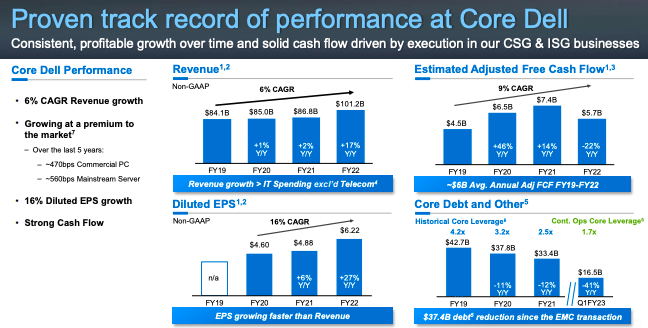
    DELL has a proven track record of performance over the years, with its Q1 fiscal 2023 being another record quarter following the previous. The quarterly total net revenue rose by 16% YOY to a record $26.1 billion. Analysts were looking ahead to sales of $25.03 billion for the quarter. The infrastructure solutions sales were $9.3 billion (up 16% YOY), and Personal Computer sales were $15.6 billion (up 17% YOY). Commercial PC sales surged by 22% to $12 billion while consumer PC sales inched 3% to $3.6 billion.

    Posting a record operating income of $1.6 billion with an increase of 57%, the non-GAAP operating income was up by 21% to $2.1 billion.

    Furthermore, the net income from continuing operations rose by 62% on a GAAP basis and 36% on a non-GAAP basis. The adjusted diluted earnings amounted to $1.84 per share in the quarter with an uptick of 36% YOY. The earnings also surpassed the consensus estimate of $1.38 per share.

    At the end of the quarter, DELL has the remaining performance obligations of $42 million (up 14%) and deferred revenue of $27.4 billion. Cash and investments totaled $8.5 billion.

    Q2 & Fiscal 2023 Guidance

    For the ongoing Q2 fiscal 2023, DELL provided guidance of adjusted EPS of $1.55-$1.70 with revenues of $26.1-$27.1 billion. Both earnings and revenue are expected to grow 10% YOY at the midpoint of the guidance. On the other hand, analysts had the Q2, fiscal 2023 expectations pegged at EPS of $1.56 on revenues of $26.01 billion.

    Additionally, for the full fiscal year 2023, the company said that it expects diluted non-GAAP EPS growth of 12% or above and revenue growth of roughly 6%. Both Infrastructure Solutions Group (ISG) and Client Solutions Group (CSG) are expected to contribute to the revenue growth. Analysts have polled the full-year estimates at earnings of $6.52 per share on revenues of $104.38 billion.

    DELL’s Valuation

    DELL stock is currently trading very cheap with a 2023 forward price-to-earnings ratio of 7.7. Its forward price-to-sale ratio is 0.3 and its forward FCF yield is 15.7%. With a price target of $94.36 per share, the stock is very much undervalued. Compared to its peers like Apple, Microsoft, and the parent companies of Google and Facebook, DELL is the cheapest by miles.

    With shares down over 21% year to date and attractive valuations, the undervalued stock is very much a buy despite some marking it as a hold.

    Conclusion

    With a comprehensive IT solutions portfolio and strong competitive positioning, DELL has once again proved itself with better than forecasted Q1, earnings. The company not only posted a record quarterly earnings but also forecasted upbeat guidance for the ongoing quarter and year. Its valuation implies nearly 88% upside potential and being undervalued at the moment, the stock is a must-buy. The tech giant is poised for much growth in the future as it has kept the positive momentum going with its diverse portfolio of offerings despite a slowdown in PC demand post the pandemic highs.
  • Novavax Inc. (NVAX)’s Covid Vaccine Might Hit U.S. Market Soon But there are Many Concerns

    The outbreak of Covid-19 ushered the world into utter chaos, followed by continuous fear. Pharma giants rushed to make a viable vaccine for the virus that was not slowing down despite worldwide mobility restrictions and lockdowns. While developing a vaccine was a challenge in itself, a viable one even more so, and to top it off, commercial availability was another. Still, Moderna and Pfizer, along with BionNTech came out victorious with their Covid jabs in 2020, falling behind was Novavax Inc. (NVAX). While the two giants were winning authorizations for their vaccines, NVAX was still dealing with a formal submission. However, the company is soon to announce the all-important FDA authorization of its Nuvaxovid after the review ends in early June. But even if the company wins the authorization, there are many concerns that have investors and experts worried.

    NVAX Stock’s Losses

    Since hitting its pandemic high of $331.68 a share, NVAX has retraced over 80%. Down more than 67% year to date, the stock is currently valued at a price of $47.00 per share as of May 26. In this week alone, the stock lost nearly 19.5% as investors weigh in on its future. Much of this downfall comes from management’s delays in the filings and applications regarding the vaccine, while negative investor sentiment also played a role this year.

    While this severely beaten-down price of the Covid vaccine maker does bring a good entry point, there are many factors to analyze before making the decision. Even if the company achieved the much-awaited authorization for its vaccine, would it be much meaningful at all now that the market is highly saturated? Let’s have a look at what it is and what it might be!

    NVAX’s Covid-19 Vaccine

    The company’s covid-19 vaccine NVX-CoV2373 is known as Nuvaxovid. Unlike the mRNA vaccines dominantly present in the U.S., Nuvaxovid is a protein-based vaccine. So far, the vaccine has shown great potential with all of its three pivotal, large-scale studies proving its efficacy. Last year, two trials in adults in the U.S., Mexico, and the U.K. yielded vaccine efficacies of 89.7% and 90.4%, respectively. The third trial in adolescents resulted in a vaccine efficacy of 80%, which was announced earlier this year. This makes NVAX the third drug maker to reach the threshold of 90% VE in Covid-19 trials. This also signals green to the possibility of its vaccines becoming a standard for initial inoculations and booster shots.  

    Saturated Market

    An FDA advisory committee is set to review NVAX’s Emergency Use Authorization (EUA) on June 7, 2022. Even if it is approved, this will still be way behind its rivals and a huge number of dollars short. According to the company, management is confident that the vaccines will receive authorization due to their strong efficacy results.

    Following its anticipated approval, the Covid jab will enter the U.S. market when 76% of adults are already fully vaccinated and the market is shared by giants like Pfizer and Moderna. Luckily for NVAX, Johnson & Johnson’s vaccine use was brought down by the FDA recently. However, the over-saturated market situation does not leave the company’s vaccine with much space.

    New Variants

    Another downside to entering the market at this point is the fact that the FDA is considering redesigning Covid shots to target its mutations. All the existing vaccines target the spike protein of the original strain, while today many new variants like delta and omicron are roaming-free. With the emergence of these new variants, the existing Covid vaccines have become less effective. Although the company is conducting studies on its modified vaccine in omicron, it is still a long way.

    The Upside

    On the upside, there are people who prefer protein-based vaccines over the recently accepted mRNA ones. Protein-based vaccines are based on older and potentially more trusted technology than mRNA jabs. There is even a debate going on regarding the downsides of mRNA vaccines. Moreover, the possibility of NVAX’s vaccine being a booster dose and approved for ages 12-17 also exists. This would help the company tap into the huge unmet need for a Covid shot for children in the U.S. More importantly, the company is projecting a full-year sales forecast of $4 billion to $5 billion.

    Financial Overview

    For Q1 2022, NVAX reported revenue of $704 million, which shot up by over 57% YOY. This included $586 million in sales of the Covid vaccine. However, the sales still fell short of the consensus estimate of $845 million.

    As a commercial-stage company, NVAX posted its first profitability with earnings of $203 million or $2.56 per diluted share. Much better than the loss of $233 million ($2.56/share) a year ago, the earnings still were below the expected $2.69 per share.

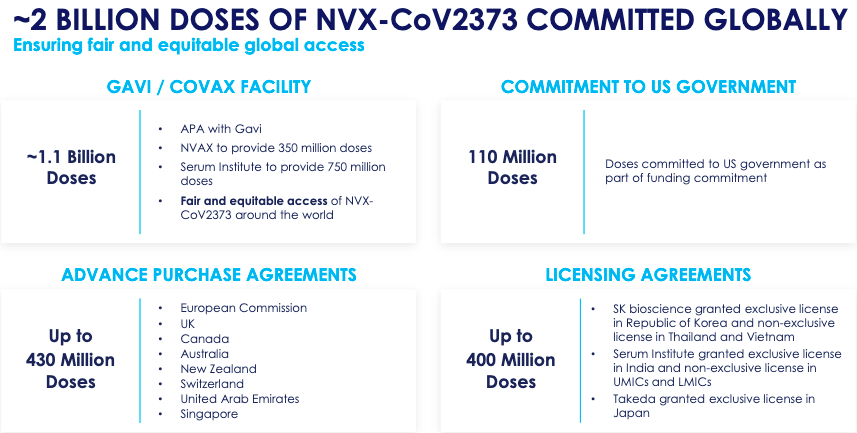
    The company is said to have delivered just 42 million doses of the Covid vaccines in Q1 while it maintains its full-year expectations of $4-$5 billion in sales. Management said demand is expected to pick up in Q2, while it still has to receive an order from Gavi. The advance purchase agreement with Gavi calls for the company to deliver 350 million doses. The company’s doses commitments are as below:

    Source: Company Investor Presentation

    Future Possibility

    While the company might not be able to beat advanced rivals Pfizer and Moderna right now, there’s huge potential and a big possibility in the future. A tremendous lift to the company can come from the fact that it is working on a combined coronavirus-flu candidate. With its coronavirus and flu candidates each having completed phase 3 trials with primary endpoints, NVAX is most likely to get to market first in this. The phase 2 trial of the combined candidate is set to be launched by the end of this year, while Phase 1 reported positive results. Moderna, which is also developing a combined candidate, is still in the preclinical stage. On top of it, the company does have a cash stockpile of $1.6 billion, more than enough to fund all its clinical programs.

    According to experts, Covid-19 is here to stay and in the future people would most likely be getting annual coronavirus shots along with flu shots. Thus, people would most definitely choose one combined shot over two separate ones.

    Conclusion

    While headwinds to the company exist due to lagging behind its advanced rivals, NVAX still has much potential for growth due to a number of reasons. Even if the current market is saturated, its protein-based technology does give it a little edge and its potential vaccine authorization for children opens a huge opportunity. A huge plus to the company becoming a leader in the future comes from its combined flu and coronavirus candidate, which has shown much potential so far. Hence, maybe the stock might not be the best buy right now, the future holds great prospects.

  • Datadog Inc. (DDOG): A Beaten Down Cybersecurity Stock Worth Adding to Your Portfolio

    With the macroeconomic instability and geopolitical turmoil, investors are fretting over the uncertain outlook. Rising rates are driving investors toward safer blue-chip plays and dumping many growth stocks in the process. The tech-heavy Nasdaq Composite has squared itself into the bear market territory with losses nearing 30%. However, this brutal sell-off has also shrunk the valuations of the priciest growth stocks to more accessible levels. Thus, it presents a great opportunity to upgrade one’s investment portfolio, given that the near-term volatility is overlooked. Coming at a bargain price amid the volatile market situation is the cybersecurity growth stock, Datadog Inc. (DDOG).

    Market Potential

    In today’s digital-first and cloud-powered business world, cybersecurity companies are becoming highly essential. Cybersecurity plays a key role in the evolving digital transformation, cloud computing, and Web3. With the rapid technological changes due to the sustained hybrid work environment, the need for cybersecurity solutions is only going higher.

    Estimated to have been $184.93 billion in 2021, the global cybersecurity market is expected to grow at a CAGR of 12% from 2022 to 2030. According to estimates by McKinsey & Company, $101.5 billion would be spent on cybersecurity service providers by 2025. And the cost related to cybercrime is anticipated to go up by 15% on an annual basis to reach $10.5 trillion in 2025. The report also said that 85% of small and mid-size enterprises would increase their IT security spending until 2023.

    Moreover, the current geopolitical crisis due to the war on Ukraine is also proving a driving factor in the demand for cybersecurity services, as cyber-attacks are on the rise. Hence, the market opportunity is great and there’s huge potential for growth.

    Datadog Inc. (DDOG)

    DDOG is a SaaS monitoring and security platform for cloud applications that monitors databases, servers, and apps across organizations in real-time. Its growing portfolio of monitoring and security products is helping businesses run their operations smoothly with no disruptions.

    Down over 50% year to date, the stock is currently valued at a price of $84.15 as per the pre-market data on May 26, 2022. At the time of writing, DDOG had declined by 5.16% in the session, hovering just above the new 52-week low it registered yesterday. Let’s have a look at what makes the stock a good buy.

    Sway with customers

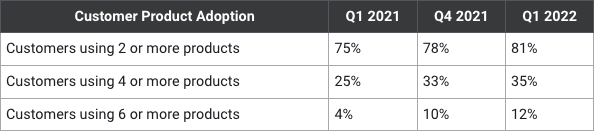
    DDOG is becoming an essential part of modern-day business as more and more customers continue to adopt its products. Its products and services have been seeing strong customer momentum. According to Motley Fool, the adoption of its products has been increasing sequentially:

    Source: Motley Fool

    Moreover, as per the recent Q1 presentation of the company, its net dollar-retention rate topped 130% for the 19th consecutive quarter. Its new customers rose by more than 30% YOY to reach 19,800 in Q1 2022. Not just this, but the company’s high-value customers with over $100,000 in annual recurring revenue, grew by 60% to 2,250.

    New Product Launches

    DDOG has continued a steady stream of new products to enrich its portfolio of offerings and ensure deeper penetration into customers’ organizations. Recently, the company expanded its security products with Application Security Monitoring to protect against hackers. Extending its Watchdog AI Engine, the company also added multiple new features like root-cause analysis to it. The company has also extended its partnership with Microsoft for its Azure Adoption Framework.

    Additionally, the company is further enhancing its application security with the inculcation of Hdiv Security’s capabilities. The company recently announced its plans for the acquisition of Hdiv.

    Financial Overview

    For the first quarter of 2022, the company came out with adjusted earnings of 24 cents per share while analysts were expecting 11 cents a share. The adjusted net income was $83.7 million, with a non-GAAP operating margin of 23%.

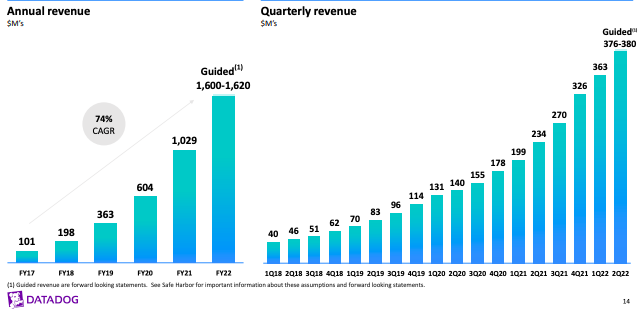
    Increasing 83% YOY, the quarterly revenue of $363 million also surpassed the consensus estimate of $339 million. The company has been demonstrating a very rapid revenue growth since 2017.

    Source: DDOG’s Q1 Presentation

    Both the earnings and revenue came well above its own guidance of 10-12 cents a share on $334-$339 million, respectively.

    At the end of the March quarter, DDOG’s cash, cash equivalents, restricted cash, and marketable securities totaled $1.7 billion.

    Outlook

    For the second quarter of 2022, DDOG is expecting earnings of $0.13-$0.15 per share on revenue of at least $376 million. Analysts had forecast earnings of $0.12 per share on sales of $362 million for the quarter.

    The full-year expectations of the company lie at earnings of $0.70-$0.77 a share on sales of above $1.6 billion. Consensus estimates for the year are $0.52 per share on the sales of $1.5 billion.

    Conclusion

    Even if beaten down currently, DDOG checks all the right boxes to poise it for much growth in the future. It boasts a strong financial profile, customer growth & retention, a vast portfolio of offerings that continue to further expand, and a huge market opportunity.

  • Snowflake Inc. (SNOW)’s Outlook Disappoints, Shares Reach Below IPO Price, Buy/Sell/Hold?

    The stock market has faced severe blows in 2022 so far amid the geopolitical and economic situation. Its steep drop has incited panic and panic has further fueled the sell-off. However, taking an enormous hit are the technology stocks which have fared relatively worse. The reason is their higher uptick in the last two years as the pandemic led to a technological revolution. The tech-heavy Nasdaq is currently in the bear market territory with losses from its highs extending to nearly 30%. But amid this downfall, many cloud stocks have fallen much lower with Snowflake Inc. (SNOW) down over 60% year to date.

    In September 2020, SNOW, with its stellar customer growth, pulled off the largest IPO ever by a software company, raising $3.4 billion. With an IPO price of $120, the stock then rallied to near $400 within months. However, 2022 has brought about a severe downfall in the stock. With its debatable valuations, stellar revenue growth, and bullish industry outlook, the stock has mixed reviews right now.

    What’s the Latest?

    On May 25, the company came out with financial results for the first quarter of fiscal 2023. The company’s earnings and revenues surpassed the consensus estimates. But the whole year’s guidance fell below the expected, which led the stock on a downtrend post the earnings release. Hence, the SNOW lost 14.14% in the pre-market to reach $114.00, falling well below its IPO price. This downtrend followed an increase of 2.42% in the prior session, which had the stock valued at $132.47 per share.

    SNOW’s Earnings Highlights

    The cloud-based data warehousing company posted revenues of $422.37 million, which improved by 85% YOY. The quarterly revenues surpassed the consensus estimate by 3.11%.

    Growing 85% YOY was the product revenue of $394.4 million while remaining performance obligations totaled $2.6 billion.

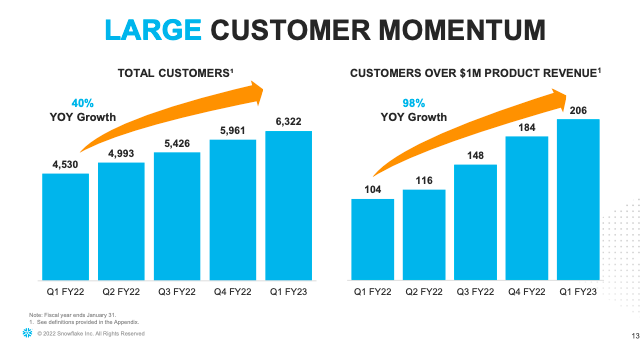
    For the quarter ended April 30, 2022, SNOW had a net revenue retention rate of 174% while the details of customers are in the chart below:

    Source: SNOW’s Q1 Presentation

    The company’s quarterly earnings stood at $0.01 a share, while analysts were expecting a loss of $0.01 per share. On the other hand, the year-ago loss was $0.24 per share on an adjusted basis.

    The first quarter of fiscal 2023 witnessed a record non-GAAP adjusted free cash flow of $181 million.

    Fiscal 2023 Guidance & Future Outlook

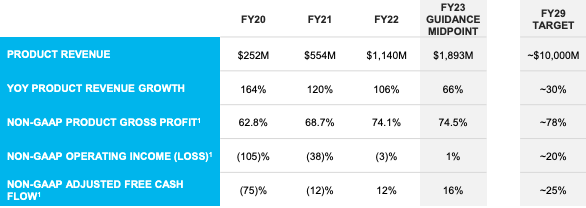
    For the full-year fiscal 2023, the company provided the following guidance:

    Source: Company Q1 Presentation

    The company’s guidance for the fiscal year came below the analysts’ expectations, which caused the recent sell-off of the stock. Analysts were expecting earnings of $0.12 million on revenues of $2 billion for the full year. For the ongoing quarter, the consensus estimate is an EPS of $0.01 on revenues of $464.02 million.

    Experts are of the opinion that the company’s revenue will grow by 55% in 2024 with earnings of $0.38 per share by then. The company has plenty of revenue growth potential ahead. A Morgan Stanley analyst recently said that there is a huge opportunity for the company to amass and expand more to Fortune 500 and Global 2000 customers. At the present, its Fortune 500 customers pay an average of $1.0-$3.5 million to the company. Roughly two-fifths of Fortune 500 companies use SNOW’s software in the cloud, with giants like Pfizer as its customers.

    The cherry on top, data cloud, and cloud warehouse is an ever-expanding ecosystem with exponential growth in the years to come.

    SNOW’s Valuation

    Given the fact that the company isn’t fully profitable yet, its P/E ratio isn’t suitable for analyzing the valuation of the stock. On the other hand, the stock is currently trading at a P/S ratio of 33. Compared to its industry peers, the P/S ratio is very high, as Amazon has 2.7, Oracle 4.5, and Microsoft 9.8. However, the wider sentiment is that the stock is undervalued due to its exponential revenue growth YOY. Its strong cash position, no net debt, and huge positive free cash flow all support the idea of it being undervalued.

    Furthermore, analysts have pegged its average price target above $275 a share. This represents an upside of over 110% from its current price levels.

    Conclusion

    While the opinions on SNOW’s current valuation are mixed with an affinity towards it being undervalued, the company does have a bullish long-term outlook. The company boasts a strong profile with positive free cash flow and a huge net revenue retention rate. With a bullish outlook of the industry and its strong, improving position near profitability, SNOW has a bright future ahead. The stock might not be a buy right now but as it nears profitability in the fundamental shift towards cloud computing, it would definitely be a good value stock to add to one’s portfolio.

  • NVIDIA Corp. (NVDA) Might have Dropped on Bleak Short-Term Outlook but its Bulls for the Long-Term

    The graphics processing units (GPUs) supplier, NVIDIA Corp. (NVDA) is currently down on its near-term outlook, which disappointed many. While the wider geopolitical and economic instability has been taking a toll on the stock this year, its long-term prospects are magnificent. It is one of those high-value growth stocks that is best to hold on to for the decades to come.

    Down over 42.28% in 2022, the latest blow to the NVDA came from its yesterday’s earnings report. The company beat its Q1 fiscal 2023 earnings and revenue estimates but forecasted guidance below the expectations. Thus, the report sparked a sell-off in the stock, which led to a downfall of 6.82% in the after-hours on May 25, 2022. The stock was then trading near its lows at a price of $158.17 a share. This decline came after a rally of 5.08% in the earlier session on the day.

    NVDA’s Upbeat Q1 Performance

    Source: iStock

    As expected, the graphics card giant came out with upbeat Q1, 2023 results that surpassed estimates for all key areas. The company posted revenue of $8.29 billion in the quarter which was well above the estimate of $8.10 billion. The quarterly revenue grew by a nice 46% YOY and 8% sequentially with record revenue in Data Center and Gaming. The Data Center revenue was above the expected $3.63 billion at $3.75 billion while the Gaming revenue was $3.62 billion against the estimate of $3.53 billion. This record revenue in its segments came against a backdrop of the numerous challenges from the macroeconomic turmoil.

    Moreover, the chip-maker had a net income of $3.44 billion in the quarter, which went up by 49% YOY and 3% sequentially. Growing at the same pace was the adjusted earnings of $1.36 a share, which beat the consensus estimate of $1.29. On the other hand, the operating income in the quarter shot up by 55% YOY and 8% sequentially to $3.95 billion.

    Share repurchases and cash dividends in the quarter accumulated to a return of $2.10 billion to shareholders. This week, the company further increased and extended the share buyback plan to repurchase an additional $15 billion worth of common stock through December 2023.

    Q2 Fiscal 2023 Outlook

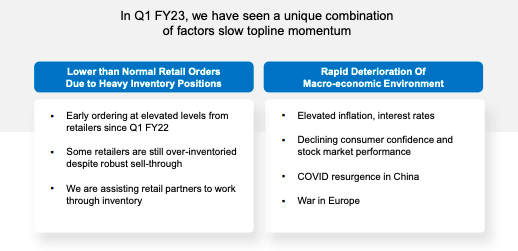
    The fast deteriorating geopolitical and economic conditions had the company post an outlook that disappointed investors. NVDA is anticipating a reduction of roughly $500 million in its Q2, revenue from the war in Ukraine and lockdowns in China due to Covid-19. Thus, the company expected the ongoing quarter’s revenue to be $8.10 billion +/-2%. Wall Street was expecting revenue of $8.44 billion for the quarter.

    Non-GAAP gross margins are pegged at 67.1% +/-50 basis points, operating expenses at roughly $1.75 billion, and other expenses at $40 million approximately.

    Deteriorating Market Conditions

    Looming Recession

    Playing a huge role in NVDA’s year-to-date decline and the bleak outlook for the ongoing quarter are many geopolitical and economic factors. The stock market is in turmoil as inflation surges and borrowing money becomes harder. The Fed is upping interest rates further to curb the rising inflation and save the economy from a recession. However, the chances of a recession are becoming more and more real by the day. According to a survey by Bloomberg, recession chances in the U.S. have increased from 15% three months ago to around 30%. Furthermore, history shows that whenever the average quarterly inflation went above 5% and unemployment below 4%, the economy faced a recession the following year. With the U.S. having crossed those metrics in Q4 2021, CEPR agrees on a recession sometime in 2022. Even if the economy withstands the pressures this year, battling rising rates would become harder in the next year.

    Macro Environment

    The economic macro environment is also becoming more and more challenging by the day. While the war on Ukraine is one aspect, strict lockdowns in China are another. Both have fueled a global supply chain bottleneck and slowdown of economic activities. The global semiconductor supply chain has been immensely impacted specifically due to the China shutdowns. Semiconductors, being the key to numerous industries, including computers, vehicles, healthcare, etc., have produced a huge supply and demand gap.

    Equities Downfall

    The overall situation has led to the downfall of equities markets with the Nasdaq squared in the bear market territory and S&P 500 near it. The S&P 500 composite recently had a brush down with the bear market as it temporarily fell over 20% last week and is now around -18%. If the geopolitical and economic instability continues, it is only plausible that the composite will hit the bear market territory like Nasdaq. Not only equities but cryptocurrency are also plunging down continuously this year.

    With Every Fall Comes an Opportunity

    Amid this market downfall due to the geopolitical and economic turmoil comes a good investment opportunity. Such downfalls are inevitably followed by rebounds and hence investing in worthy stocks at a beaten-down price is the best answer. At times like these, NVDA is one of the most attractive stocks that could lead to profits over a lifetime, as its long-term outlook is highly bullish.

    NVIDIA Corp. (NVDA)

    NVDA with the invention of GPU has revolutionized the entertainment industry with ultra-realistic visuals. GPUs are also used in complex data center workloads, like AI and scientific computing. Being the first mover, the company presently has a 90% market share in workstation graphics and supercomputer accelerators. Added to this, the company’s portfolio also includes data center networking solutions and software products. 3D graphics and AI are becoming more relevant by the day. Metaverse, virtual reality, autonomous robots, and vehicles are reshaping the world. All of these are proving substantial tailwinds for the company. The market opportunity, according to its management, is over $1 trillion.

    To deal with the current situation, the company has numerous new products in line for launch this year. It also plans to slow down hiring and be more prudent with its operating budgets. While a recession could lower the demand for pricey graphics cards in the near term, its huge market opportunity, wide portfolio, industry position, and strong fundamentals, all are indicative of its future growth. Even in the short term, the company is expected to outperform its industry in terms of revenue and earnings growth, by experts. Despite what happens this year or the next, NVDA is a stock worth buying and keeping for years to come.

    Conclusion

    The market is in a downfall. Geopolitical and economic conditions are deteriorating, a recession is in sight and inflationary pressure is peaking. But regardless of the current or near term situation, NVDA remains a high-value stock with huge growth prospects in the longer run. The current conditions and its beaten-down price only bring a great opportunity to purchase it at a much lower price than its value. All but one of the 50 brokerages following NVDA suggests holding the stock or buying more of it.

  • What Does Snap Inc. (SNAP)’s Monumentous Fall Warrant for it’s Future?

    Fitting the word exactly in both impact and the event itself, Snap Inc. (SNAP) had a “monumentous” fall from grace. The stock drowned others along with itself when a filing from the company revealed its concerns over the recently provided 2022 outlook. While the outlook was already below the expectations, the filing said that the company now thinks the upcoming results to fall at the lower end of the guidance. The concerning news not only led the stock to a record tumble but also impacted many others in the social media and online advertising sectors. Joining SNAP in the downtrend were giants like Alphabet, Meta, Twitter, and many others. The company’s dreadful outlook caused the social media stocks to shed over $135 billion in market value in just one day (Tuesday).

    The profit warning also highlighted concerns for the broader advertising market as the social media company’s woes signal a larger slowdown. Hence, it has sparked a debate over the future of the online-ad market, as the economic and geopolitical instability has many cutting down on marketing/advertising to reserve capital. Many concerning questions are being raised now regarding the larger outlook of the industry that once boomed in the peak pandemic days.

    But given the wider macroeconomic and geopolitical situation, what does it mean for the industry and the stock itself? Let’s have a look at the factors at play.

    SNAP Stock

    Down nearly 73% in just 2022, SNAP has lost roughly 79% in the past twelve months. Following the dreary events, the stock closed trading at $12.79 a share yesterday, well below its IPO price of $17 per share in 2017. A decline of over 43% in the session caused it to register its new 52-week low of $12.55.

    However, in the pre-market today, the stock is trading in the green as hopeful investors buy the dip. At the time of writing, the stock was valued at $12.94 a share with a slight uptick of just 1.17%.

    The Profit Warning

    In a regulatory filing late on Monday, the social media company warned that the prevailing uncertainty has spiked beyond expectations. According to the company, the macroeconomic environment’s deterioration has happened at a much faster pace than expected since it provided the recent guidance. Thus, the panic-filled situation has the company rein in both its revenue and profit guidance for the second quarter of 2022.

    It was only near the end of April that the company issued its Q2, 2022 guidance with revenue growth of 20%-25% YOY. The guidance had the adjusted EBITDA estimated to break even and at $50 million for the quarter. But the growing concerns regarding the wider instability have the company now aiming the outlook at the lower end of the guidance. However, the company said that it remains optimistic about SNAP’s long-term growth with solid ARPU improvement.

    The Broader Situation

    The macroeconomic environment is becoming more and more unstable as the war on Ukraine continues. Factors like rising inflation, spiking interest rates, supply chain hurdles, labor disruptions, and even policy changes in the said industry are also proving detrimental. While social media and online-ads platforms benefitted hugely from the pandemic, the opening of economies and the wider instability are impacting it severely. Moreover, disruptions in the digital ad market, like privacy policy changes by Apple, have proved challenging as well.

    Since inflation is now at an all-time high in roughly 40 years, companies are struggling with increased costs and reduced profits. This has forced many to cut down on their advertising and marketing spending to help reserve capital. Furthermore, many have suspended all their marketing and media activities in Russia and Ukraine due to the war.

    So, what’s the Takeaway?

    While the numerous threats and added woes to the social media and online-ads market are raising questions over its once largely bullish outlook, the long-term expectations remain the same. The headwinds appear to be only for the short term and the market is expected to continue booming as the world now largely depends on the digitalized form of everything. Social media and online advertising are the new norms and the prior means of marketing are becoming obsolete.

    To cope with the economic disruptions, SNAP is working tirelessly and continues to invest despite the unstable environment. The company has been launching several new augmented reality products and services, along with controlling costs. It is trying to shift from just being a social media platform and diversifying its revenue streams. The company also said in a recent presentation that it plans to shrink hiring and reduce expenses in the near term while improving productivity.

    Conclusion

    Following the recent profit warning, many experts did cut back on their price target for SNAP. However, the stock still maintains a “hold” rating and even “buy” from some. Given the long-term bullish outlook of the industry and the company, the current beaten-down price does present a good buying opportunity.

  • Genocea Biosciences Inc. (GNCA) stock on a Wild Run as its Review Failed to Help Save from Closing Entirely

    The biotechnology company, Genocea Biosciences Inc. (GNCA) has tried to develop a working drug for many years. Its efforts included drug development for herpes, pneumonia, and the most recent cancer. The company had lately been working on its proprietary ATLASTM platform to develop cancer therapies using T cells. It even entered into an R&D collaboration with Janssen (a pharmaceutical company of Johnson & Johnson) regarding cancer therapies under the ATLAS platform. GNCA was studying its candidate GEN-011 and GEN-009 in Phase 1/2a clinical trials.

    However, with no meaningful results from any of its trial progress and a dwindling cash position, the company commenced restructuring last month. It even laid off 65% of its staff and was evaluating its R&D programs. The biotech firm was exploring its strategic alternatives to improve shareholder value and save it from its downfall. But the latest news of a complete wind-down and delisting from Nasdaq concluded that the company failed to achieve any results from the review process.

    The Latest News & Price Action

    Source: Real Business Rescue

    The latest news caused the already plummeting shares to collapse in the regular session. GNCA stock plunged by an extreme 72.69% to trade at just $0.0609 at the close of regular trading. This brings the one-year losses of the stock to over 97%, meaning it has lost nearly all of its value with a year-to-date decline of nearly 95%. But surprisingly, the following after-hours session on May 24 brought a weird turn of events for the stock. The stock rebounded to add 19.87% in the late trading session despite the company’s gravely depressing news. Consequently, GNCA soared 45.64% to $0.0887 in pre-market trading on May 25.

    It seems investors are making a run for some final profits from the stock before the company closes down for good and delists from the exchange. This is the only plausible explanation for the after-hours rebound of the stock as there is nothing left in the company to be buying the stock.

    Precursors to the Downfall of GNCA

    Dwindling Cash Position

    The biotechnology company had devoted most of its efforts to product research and development but had not generated any product revenue to date. When it posted 2021 year-end results back in March, the declining cash balance of GNCA raised many concerns. Its cash balance has been reducing at a very fast pace from $79.8 million to $37.1 million and now to just $20.1 million as of March 31, 2022. As per the Q1 report, the company expected its cash balance to lead it to just the next quarter, Q3 2022.

    Moreover, the increasing expense and loss also raised doubts about the company continuing as a going concern. In the first quarter of 2022, the loss from operations was $15.8 million while it used $15.2 million of cash in operating activities. At the end of March, GNCA had a deficit of $423.8 million, and meeting future obligations seemed quite impossible with significant operating losses seen for the foreseeable future.

    In an effort to raise funds, the company had also an agreement with Cowen for an at-the-market equity offering. In the first quarter of 2021, the company was able to raise just $0.4 million under the ATM.

    Unfruitful R&D Programs

    The company had long been excited about its GEN-011 trial in pre-treated solid tumor patients. GNCA presented early data from the trial at the American Association for Cancer Research (AACR) annual meeting. While investors and experts were highly disappointed in the data, the company still called it “encouraging”. According to the data, 4 out of 5 patients demonstrated stable disease at Day 57. Three out of five showed clear biologic changes after infusion while all patients had progressive disease at Day 113. Only one patient marked a 10% reduction in tumor diameters with the resolution of tumor-related cough.

    Following the unimpressive data announcement, GNCA shares went down by a hefty 51.5% in regular trading alone.

    Last Nail in the Coffin

    The last nail in GNCA’s coffin was its non-compliance with Nasdaq listing standards due to its share price. The company’s shares have been closing below the required $1.0 per share for more than consecutive 30 days. This led to the exchange notifying the company as it was facing a threat of delisting its shares.

    The Restructuring & Review Process

    Critically short on cash, the company announced the initiation of a strategic review and restructuring process. It even onboarded professional advisors and an investment bank to help it find a solution to its woes. Options on the table included the partial or complete sale of the company and a merger or reverse merger.

    Furthermore, the restructuring plan had it reduce its workforce by a substantial 65% while it evaluated its clinical and research programs. Following the layoffs, the company was left with just 26 employees.

    Hence, the Wind Down & Delisting

    Unable to find any means to save the company, GNCA said on Tuesday that it has decided to completely wind down its operations. The company is even letting go of the remaining staff, just leaving the essential few for completing the wind-down process.

    Yesterday, the company delivered a formal notice to The Nasdaq Stock Market Inc. regarding its voluntary delisting from the exchange. The company plans to file a Form 25 with the SEC by June 2 in order to effect the voluntary delisting while it already was facing the threat.

    Conclusion

    GNCA tried its best to deliver a working drug and start generating revenue. But its dwindling cash balance and increasing expenses forced it to opt for a strategic review and restructuring. Even after laying off 65% of its staff and considering a merger/sale, the company was unable to find a standing ground for itself. Thus, with the last nail in the coffin from its non-compliance with Nasdaq, it decided on a complete wind-down. GNCA is now in the process of closing its shop for good and voluntarily delisting from the exchange.

  • Nordstrom Inc. (JWN) Emerges as a Victor in the Retail Sector Despite Challenges

    The apparel segment has been trying to recover over the past few months as economies continue to reopen. According to the Commerce Department, the clothing and accessories sales grew 0.8% month over month in April. Moreover, the jump was a much solid 11.2% on a YOY basis. Thus, the sector seems to be making a speedy recovery from the woes of the pandemic.

    The pandemic had people confined to their homes, which ultimately led to a huge decline in their spending on clothes and related items. Hence, the apparel industry took a severe hit from the Covid outbreak. However, the beginning of 2021 brought relief as economies started reopening. But the omicron and delta variants continued giving blows. Finally, near the end of last year, things started improving for the industry and it has been making a speedy recovery since then. With offices and schools now functioning at optimum levels, people are now spending more on clothes and shoes as they upgrade their wardrobes. Summer and vacation plans are also helping boost demand in the sector.

    But challenges remain at large with inflation and rising interest rate on top of the wider economic downfall. The Fed has already hiked rates by 75 basis points in the last two meetings, with more hikes on the way. Inflation has crossed the highest levels in 41 years of the country. The cherry on top. A recession is looming overhead. However, despite the numerous challenges, the apparel segment is on track to make a recovery. Helping the segment is the increase in personal income and expenditure. More cash on hand will likely boost spending in the future which in turn will aid the apparel business.

    JWN; The Retail Victor

    In the recent weeks, many retail companies posted earnings that disappointed immensely. After a horrible slate of financial reports from retail stocks, many were fearful of JWN’s earnings. There were even reports of dumping the stock or staying away from it as its earnings date came closer. But the high-end apparel retailer posted earnings that blew in the face of most of its industry peers.

    With its upbeat earnings and outlook, JWN stock added nearly 9.5% in the pre-market on May 25. A volume of 5,609 shares had the stock reach $22.63 in the pre-market following a decline of 3.59% in the prior session. Investors’ fears over the earnings had the stock valued at $20.68 at the close of the regular trading session.

    Q1, 2022 Financial Results

    For the first quarter of 2022, the company posted net sales of $3.57 billion while analysts were expecting $3.28 billion. The net sale grew by 18.7% and the Nordstrom banner store sales jumped by 23.5%, exceeding the pre-pandemic levels. The Nordstrom Rack saw an increase of 10.3% in its sales and is marking a consistent sequential improvement towards its pre-pandemic levels. With digital sales remaining flat YOY, shoppers’ appetite for going out and visiting stores seems strong.

    Furthermore, the gross merchandise value (GMV) went up 19.6% in the quarter while the Nordstrom banner GMV went up by 24.8%. The gross profit saw an increase of 190 basis points YOY.

    While the quarterly net earnings were modest at $20 million, the adjusted EPS of $(0.06) came well above the expected $(0.08). The earnings per share represent a surprise of 25%. Moreover, the quarterly EPS was impacted by discrete tax expenses in relation to stock-based compensation.

    Additionally, the company’s board has also authorized a new $500 million buyback plan.

    JWN’s Outlook

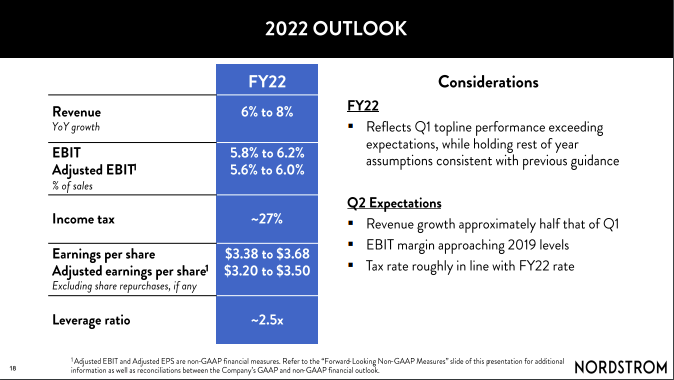
    For the ongoing fiscal 2022, the company’s updated guidance is mentioned in the table below:

    Source: JWN Q1 Presentation

    Analysts are expecting earnings of $0.84 on sales of $3.98 billion for the second quarter. And the full-year expectations are EPS of $3.30 on sales of $15.55 billion.

    In a battle to deal with the rising costs due to inflation and supply chain hurdles, the company has upped its prices and so far, demand has held strong.

    JWN Stock Analysis

    Currently, JWN stock maintains a “Buy” rating from most analysts as its fundamentals remain strong and outlook bullish. Sporting a Value grade of A, the stock has a P/E ratio of 6.86 which is slightly below the industry average of 8.82. Its price-to-sales ratio of 0.23 also remains a little below the industry average while the P/CP ratio is 3.80. Its valuations demonstrate that the stock is likely undervalued at the moment and hence is a good value stock.

    With its strong valuations, the apparel retailer had a price target of $22 from JP Morgan prior to the company’s earnings. Additionally, the stock has so far been doing relatively better than its industry peers. JWN has returned 8.58% year to date while its peers have lost over 10%. However, the frenzy over the retail earnings season had the stock lose over 16% in the past five days alone, making it underperform the market.

    Conclusion

    Despite the huge array of challenges brought forth by geopolitical and economic instability, the retail market is continuing its bullish trend. While rising inflation, surging interest rates, and a looming recession pose huge risks, reopening of economies and increased personal income plus expenditure are expected to boost demand.

    JWN has also been reeling under higher Covid-related labor and freight costs amid the global supply chain bottlenecks. However, remaining firm on its growth strategy, the company has dealt well with the rising costs and has increased its prices. The increased prices have not impacted its demand in any way as the latest earnings release showed strong sales growth. Continuing its path to recovery, the company provided a bullish outlook for the year as well as the ongoing quarter.

  • Nautilus Inc. (NLS) Has been Sinking Well Before Earnings on High Future Uncertainty

    The innovative home fitness solutions provider, Nautilus Inc. (NLS) has been facing severe uncertainty for the past year. Shares are down nearly 85% in the last 12 months and 60% in six. Early 2021 proved to be historical for the company, as it saw a record boost in demand due to the pandemic lockdowns fueling at-home workout routines. The Covid-19 outbreak brought about the best time for the company as outdoor gyms were closed and people sitting at homes were in dire need of a solution to keep fit.

    However, with the economies reopening after the Covid surge relaxed, NLS has been facing immense uncertainty from investors. Concerns over it being just a pandemic play remain at large as the company has only seen a decline since then. Even the latest earnings of the company demonstrated a huge decrease in demand for its solutions. Losing in all key areas, the company’s shares have been tumbling down since it posted the results yesterday. But the latest earnings decline isn’t the only reason warranting its downfall. The company is expected to deliver a highly negative earnings growth in the next few years as future uncertainty remains high. Factors like economic instability, rising inflation, and a looming recession overhead are also adding fuel to the uncertainty.

    Following the latest earnings report yesterday, NLS shares plunged by a huge 22.31% in the after-hours. Continuing the momentum, the stock has currently lost 12.35% in the pre-market today, on May 24. At the time of writing, the stock was trading at a new low of $2.20 per share.

    NLS’ Latest Earnings

    Yesterday, the company posted its financial results for the fiscal Q4 and full-year, which ended on March 31, 2022.

    In the fourth quarter, NLS generated revenues of $119.7 million, which declined by 41.9% from $206.1 million in the comparable period. The quarterly sales also fell below the analysts’ expectation of $121.57 million.

    Increased product costs, investments in JRNY®, and logistics/discounting had the gross profit margin reduced by 20.9 ppt to 17.5% against 38.4% last year. Thus, the gross profit went down from $79.1 million to $21.0 million in fiscal Q4 2022.

    A further blow came from the fact that the company’s operating income and net income converted to a loss this quarter. Both the loss from continuing operations and the net loss were $18.2 million in the quarter. The same amounted to an income of $30.6 million from continuing operations and a net income of $30.4 million in the year-ago quarter. However, the earnings per share of $(0.58) were just in line with the expected.

    For the full year of fiscal 2022, the company had a net loss of $22.4 million on net sales of $589.5 million. This compares to a net income of $88.1 million on net sales of $664.9 million last year.

    Future Guidance

    Due to the wider economic and geopolitical instability, the company is seeing a decline in short-term demand. According to the company:

    Source: Company Q4 Presentation

    Hence, NLS expects the Q1 fiscal 2023 sales to be $45-$55 million, with an adjusted EBITDA loss of $22-$27 million. The full-year guidance stands at sales of $380-$460 million, with the second half of fiscal 2023 representing 65-70% of the total sales. With an improvement expected in the second half of the year, NLS is anticipating delivering positive adjusted EBITDA for H2 fiscal 2023.

    Thoughts?

    While the company does see some improvement in the second half of the current year, the market conditions are very hazy at the moment. The war in Ukraine is most likely to continue through the foreseeable future. And the economic conditions are only expected to become even more unstable. This wider instability stems from the growing inflationary pressure, which has the Fed eyeing a further increase in interest rates. Added to this, China’s zero Covid-19 policy is also taking a toll on the global supply chain turmoil, as it is the second-largest economy in the world.

    The Nasdaq Composite is already in the bear-market territory and the S&P 500 just had a near brush with it on Friday. If the current downfall continues, it is most likely that equities will fall further to square the S&P 500 in the bear market territory as well.

    On top of this wider market instability and bleak outlook, the company’s own financial situation is becoming more and more concerning. Demand is only expected to decrease further. The highest inflationary pressure and interest rate hike in the U.S. in the past 40 years will have consumers reserving their spending even more.

    Conclusion

    While NLS is trading at a price-to-earnings ratio below its peer average, the stock is best avoided. The company’s dwindling cash position, increasing losses, and declining sales in the current unstable market conditions warrant a wider downfall in its earnings. Even the investment management firm, Olstein Capital Management has sold its NLS stake recently to avoid losing on it.

  • Provention Bio Inc. (PRVB) Might be a Good Choice as Market Sinks but with High-Reward comes High-Risk

    While Monday proved a sigh of relief in the stock market, 2022 has been a very tough year so far due to geopolitical and economic instability. While Nasdaq Composite is squarely in the bear market territory, the S&P 500 also briefly joined it on Friday. The tech-heavy composite has fallen by nearly 29% year to date and S&P 500 extended losses to 20.6% from its January high before making a comeback on Monday. The recovery on Monday as a result of the Biden government’s indication of easing tariffs on Chinese goods imposed by the prior administration. While the index might have saved itself from the official bear market territory, its year-to-date decline of over 17% still highlights the increasing dark economic outlook. This downfall is fueled by slowing economic and earnings growth, geopolitical turmoil, rising inflation, and the subsequent interest rate hike and monetary tightening by the Fed.

    Times like the current while instigating a wider sell-off in the market also force investors to stay away from anything that comes with risks. But times like these are also a great opportunity to make some profits by wisely and thoroughly choosing the kinds of risks one can take. A wider downfall in stock markets brings forth good entry points for stocks worth taking the risk at a beaten-down price. One such stock, that has been beaten down but comes with a high reward is Provention Bio Inc. (PRVB). But then again with high reward comes high risk.

    Down nearly 30% in 2022, the stock has suffered a decline of over 60% in the past twelve months. PRVB was in the green at the close of the latest trading session on Monday, May 23, at a price of $4.00 in the after hours. Let’s have a look at the rewards and risks associated with the biotechnology stock.

    PRVB’s Pipeline Developments

    The biotechnology company is working on developing therapies that delay the onset of various autoimmune diseases. Its lead product candidate is teplizumab which targets type 1 diabetes (T1D). The clinical study of the candidate demonstrated its ability to delay the onset of the clinical disease and insulin dependence in the patients for about three years. However, due to some manufacturing issues, the medicine was not approved by the FDA despite the hugely positive results. The FDA did not dispute the safety and efficacy of teplizumab in T1D. Fortunately, the company resubmitted the application for the drug in the first quarter of 2022 after addressing the raised issues.

    The FDA has assigned a user-free goal date of August 17, 2022, by which an answer will be given to PRVB. Moreover, the company recently held an investor event on May 19, regarding the potential commercial launch of teplizumab in the second half of this year. Following the FDA’s response later this year, PRVB shares could soar high on positive news or plunge further on another regulatory roadblock.

    In addition to the lead candidate, the company’s pipeline also includes PRV-3272 which is a potential therapy for preventing systematic lupus erythematosus (SLE). In case of approval, the programs would bring exponential value to PRVB. Approval of teplizumab would result in peak sales of $800-$1.2 billion and the probability of success lies around 80%.

    Financial Highlights

    Source: LaPorte

    In its latest earnings for the first quarter of 2022, the company posted a net loss of 35 cents a share against the expected 45 per share. With a quarterly earnings surprise of 22.22%, the company shrunk its loss from 52 cents per share in Q1 2021. The total net loss for the quarter was $22.0 million against the comparable $32.4 million. The decline in net loss came from a decrease in R&D expenses and an income tax benefit in Q1 2022.

    However, the company’s revenue missed the consensus estimate by 20.87% in Q1 2022. The revenues were $0.58 million for the March quarter under its License Agreement with Hangzhou Zhongmei Huadong Pharmaceutical Co. Ltd. Comparatively, there were no revenues in the year-ago period. Moreover, the company also gained $1.5 million in research, development, and manufacturing funding from Huadong, recorded in deferred revenue.

    At the end of the quarter, the company’s cash, cash equivalents, and marketable securities totaled $113.4 million. The management expected the cash balance to be enough for runway into Q1 2023.

    With the ongoing preparation for the potential FDA approval of teplizumab in Q3 2022, PRVB is expecting cash-based operating expenses of $29-$33 million in Q2 2022. Analysts are expecting a loss of 49 cents per share on revenue of $0.87 million in the ongoing quarter.

    PRVB stock Rating

    In early February of this year, PRVN was given a strong buy rating when the company announced its intention for resubmitting the teplizumab application. However, with the continued blows from the wider market instability and the goal date of August 17th, it was downgraded to a hold.

    As of last week, the consensus recommendation for the stock is a “Buy” from nine research forms with two analysts giving it a “Hold” rating. Furthermore, the stock has an average 12-month price target of $16.25.

    Conclusion

    Market dips, like the present due to the wider geopolitical and economic instability, bring forth numerous opportunities to buy meaningful stocks at pennies for their value. PRVB with a great potential near-term success for its lead candidate is one such stock that might give great profits. There are certain risks associated with the stock due to the upcoming FDA decision regarding its lead candidate but the upside is bright with an 80% chance of success.