Tag: upgrades-downgrades

  • Acadia Pharmaceuticals Inc Sees Positive Shift in Analysts Rating

    Acadia Pharmaceuticals Inc Sees Positive Shift in Analysts Rating

    The biopharmaceutical industry is in constant flux, with companies’ stock prices often being impacted by analysts’ ratings.

    JP Morgan issued an upgrade for the stock, shifting their rating from ‘Neutral’ to ‘Overweight.’ Alongside this positive change in sentiment, the investment bank also raised its price target for the stock from $29 to $32.

    This upgrade reflects a more bullish outlook on the US stocks performance and suggests that JP Morgan sees greater potential for price appreciation in the future.

    Understanding Analysts Rating Upgrade Before diving into the specifics of Acadia Pharmaceuticals Inc’s rating upgrade, it’s crucial to understand what an analyst’s rating upgrade means in the financial world.

    Acadia Pharmaceuticals Inc – Recent Performance

    In the recent trading session, ACADIA Pharmaceuticals Inc. (NASDAQ: ACAD) demonstrated significant positive movement. When the market closed, the stock settled at $23.42, reflecting a notable increase of $1.68, which translated to a 7.73% surge throughout the day.

    Additionally, during after-hours trading at 12:01 AM, the stock sustained this optimistic trend, trading at $23.50, showing a modest uptick of $0.08, or 0.34%.

    Reasons Behind the Upgrade

    The reasons behind an analyst rating upgrade can vary, but they often include strong financial performance, positive industry trends, or promising developments within the company.

    For Acadia Pharmaceuticals Inc, the specific reasons behind JP Morgan’s upgrade have not been publicly disclosed.

    Other Recent Development

    In another recent development within ACADIA Pharmaceuticals Inc. (NASDAQ: ACAD), it was reported that on October 6, 2023, the company’s Executive Vice President, General Counsel, and Secretary, Austin Kim, divested a total of 16,369 shares.

    This transaction is just one among several insider transactions that have been unfolding over the past year at ACADIA Pharmaceuticals Inc., highlighting the ongoing activity among company insiders.

    Conclusion

    The recent upgrade in rating for Acadia Pharmaceuticals Inc by JP Morgan analysts highlights the company’s strong potential in the biopharmaceutical sector.

    This upgrade, coupled with the increase in the stock’s price target, has resulted in a positive shift in the company’s stock performance, making it a stock to watch in the coming months.

  • Arista Networks (ANET): Reasons and Consequences of the Analyst Downgrade

    Arista Networks (ANET): Reasons and Consequences of the Analyst Downgrade

    Arista Networks (ANET) is making headlines following news that a financial analyst firm, Piper Sandler, downgraded its rating from “Overweight” to “Neutral.”

    This change can significantly impact the US stock company’s prospects and has left investors and market watchers curious about its implications.

    Let’s delve into the details of this scenario, understand the reasons behind the downgrade, and explore the possible outcomes for Arista Networks.

    Arista Networks: A Quick Overview

    Arista Networks is a renowned player in the data-driven, client-to-cloud networking sphere, offering top-notch platforms for large data centers, campus environments, and routing spaces.

    Their award-winning platforms deliver availability, agility, automation, analytics, and security through an advanced network operating stack.

    The recent downgrade by Piper Sandler has put Arista under the spotlight, raising questions about its future performance and growth potential.

    Piper Sandler: The Analysts Behind the Rating

    Piper Sandler is a leading name in the financial analysis industry, known for its accurate and comprehensive assessments.

    Their ratings significantly influence investor sentiment and stock market trends. Their recent decision to downgrade Arista Networks from “Overweight” to “Neutral” has undoubtedly sent ripples across the financial sphere.

    The Downgrade: What Does it Mean?

    The shift from an “Overweight” rating to a “Neutral” one reflects a significant shift in Piper Sandler’s perception of Arista’s prospects.

    This downgrade suggests that the analysts believe that Arista’s stock, which was previously expected to outperform the market, is now anticipated to perform at par with other stocks in the market.

    Arista’s Response: Innovating in a Challenging Climate

    Despite the downgrade, Arista has continued to progress and innovate. One of the company’s significant recent developments includes the introduction of the next-generation 7130 Series for ultra-low latency switching that accelerates 25G networking.

    This new system addresses the needs of 25G market data distribution and High-Frequency Trading (HFT) environments, demonstrating Arista’s commitment to staying ahead in the technology game.

    Is the Downgrade Justified?

    The downgrade of Arista’s rating by Piper Sandler was reportedly due to concerns about slower tech spending. However, whether this downgrade is justified can only be determined by observing Arista’s performance in the coming quarters.

    It will be interesting to see how the company’s innovative strategies and developments pan out in the face of these market predictions.

    The Future of Arista: Predictions and Possibilities

    While the downgrade may cast a shadow on Arista’s immediate future, it does not necessarily dictate the company’s long-term prospects.

    With their continuous advancements and innovations, Arista is well-positioned to navigate through the current market challenges. The company’s performance in the coming quarters will offer a clearer picture of its trajectory and potential growth.

    Conclusion: The Takeaway for Investors

    While the market may currently view Arista (ANET) through the lens of Piper Sandler’s downgrade, it is crucial for investors to make well-informed decisions based on a comprehensive analysis of the company’s performance, potential, and market trends.

    A single downgrade does not define a company’s future, and with its ongoing innovations and developments, Arista Networks may yet surprise market watchers and investors alike.

  • Defining Stock Upgrades and Downgrades – What You Should Know

    Defining Stock Upgrades and Downgrades – What You Should Know

    In the stock market, knowing the right definition of concepts can be tricky business. As investors, we navigate a landscape of financial jargon and terminology that can sometimes feel as perplexing as deciphering a foreign language.

    However, there’s one crucial concept that every investor should grasp – stock upgrades and downgrades definitions. These two simple yet powerful terms can have a profound impact on your investment decisions and, ultimately, your financial well-being.

    A stock upgrade or downgrade, issued by financial analysts and experts, provides a concise evaluation of a company’s current standing and future prospects.

    Understanding stock upgrades and downgrades definitions is akin to having a reliable compass in the tumultuous world of investments.

    As you conclude this read, you will find yourself better equipped to confidently traverse the ever-evolving currents of the phenomena of stock upgrades and downgrades.

    As a result, you will have a solid grasp on the upgrades and downgrades for stocks meaning.

    Definition of Stock Upgrades and Downgrades

    Stock upgrades and downgrades definitions are fundamental concepts in the world of stock market analysis, serving as critical indicators for investors to make well-informed decisions regarding their investments.

    A stock upgrade occurs when financial analysts or investment research entities reevaluate their stance on a specific stock, often favorably adjusting their outlook.

    This upgrade often suggests that the stock is expected to perform better in the future, potentially leading to higher prices and returns.

    Upgrades can result from improved company fundamentals, positive news, or a change in market conditions.

    On the flip side, a stock downgrade is the opposite. It happens when analysts or research firms lower their assessment of a stock’s potential, typically anticipating poorer performance.

    Downgrades can stem from negative developments within the company, a shift in industry trends, or broader economic factors.

    It is important to keep in mind that the term “rating change” is among the many upgrade downgrade synonyms in the financial lingo.

    These are disseminated to the public through various financial news outlets, research reports, and online platforms, allowing investors to adjust their investment strategies accordingly.

    Understanding the significance and implications of upgrade downgrade meaning is vital for making wise investment choices.

    Interpreting Stock Ratings

    Knowing stock upgrades and downgrades definitions, and not knowing how to apply it in your interpretation would be useless.

    When it comes to stock ratings, understanding the criteria analysts use is crucial. Ratings are typically assigned based on a company’s financial health, growth prospects, and market conditions.

    • Buy

      A “buy” rating implies that analysts believe the stock is undervalued and poised for growth. It suggests that the company is in good financial shape and has positive growth potential.

    • Hold

      A “hold” rating suggests that the stock is fairly valued, and analysts expect it to perform in line with the market.

      This rating may also indicate a lack of significant positive or negative catalysts in the near future.

    • Sell

      A “sell” rating indicates that the stock is overvalued or faces potential risks, and analysts believe it’s best to divest. This could be due to poor financials or unfavorable market conditions.

    In essence, a stock upgrades and downgrades briefing can help investors make informed decisions.

    Remember, though, that upgrade vs downgrade ratings are just opinions, and your investment choices should consider your individual financial goals and risk tolerance.

    Using Upgrades and Downgrades Wisely

    Okay, so we went over stock upgrades and downgrades definitions and even the interpretation. Now let’s get to the application. This is where sharp investors make their mark.

    Using upgrades and downgrades wisely is crucial for any investor. These rating changes can offer valuable insights, but they’re not a surefire path to profit.

    Here’s how to make the most of them while steering clear of potential pitfalls:

    1. Diversify Your Sources

      Don’t rely solely on one analyst’s opinion or upgrade downgrade tool. Look for consensus among different research firms to form a more balanced view.

    2. Consider the Big Picture

      Upgrades and downgrades are just one piece of the puzzle. Take into account the company’s financial health, upgrade to downgrade ratio, industry trends, and your own investment goals.

    3. Long-Term Perspective

      Avoid knee-jerk reactions to short-term ratings changes. Sometimes, it takes time for the market to fully reflect a company’s true value.

    4. Risk Management

      Set stop-limit orders to limit potential losses, and ensure your portfolio is diversified to spread risk.

    5. Stay Informed

      Keep track of the rationale behind the rating change, and monitor the stock’s performance post-upgrade or downgrade.

    Frequently Asked Questions

    What Is a Stock Upgrade or Downgrade?

    A stock upgrade is when analysts believe a stock’s potential has improved, and a downgrade is when they think it has worsened.

    Who Issues Stock Upgrades and Downgrades?

    Stock upgrades and downgrades are typically issued by financial analysts, brokerage firms, or rating agencies. The same applies to bond upgrades downgrades. In each case, the issuer must have an upgrade downgrade license.

    What Factors Lead to A Stock Upgrade or Downgrade?

    Factors like company performance, industry trends, and economic conditions can trigger upgrades or downgrades.

    Can A US Stock Be Upgraded or Downgraded Multiple Times?

    Yes, US stocks can be upgraded or downgraded multiple times as new information becomes available.

    Do All Stocks Get Upgrades and Downgrades?

    No, not all stocks receive upgrades or downgrades; it depends on analyst coverage and market conditions.

    Where Can I Find Information About Stock Upgrades and Downgrades?

    You can find this information on financial news websites, brokerage platforms, and analyst reports. Many offer an upgrade downgrade subscription to their users.

    Can Stock Upgrades and Downgrades Be Regional or Industry-Specific?

    Yes, upgrades and downgrades can be specific to regions or industries, reflecting unique factors affecting those areas.

    How Quickly Do Stock Prices React to Upgrades or Downgrades?

    Stock prices often react within days, but the extent and speed of the reaction can vary.

    Can Retail Investors Benefit from Stock Upgrades and Downgrades?

    Yes, retail investors can benefit by using these reports as part of their research, but they should conduct due diligence. Through this, they typically seek out top upgrades stocks.

    Are Upgrades and Downgrades Always Accurate Predictions?

    No, upgrades and downgrades on stocks are assessments, and the future is uncertain. Stocks may not always follow the predicted direction.

  • Comparing Upgrade vs Downgrade Impact on Stocks

    Comparing Upgrade vs Downgrade Impact on Stocks

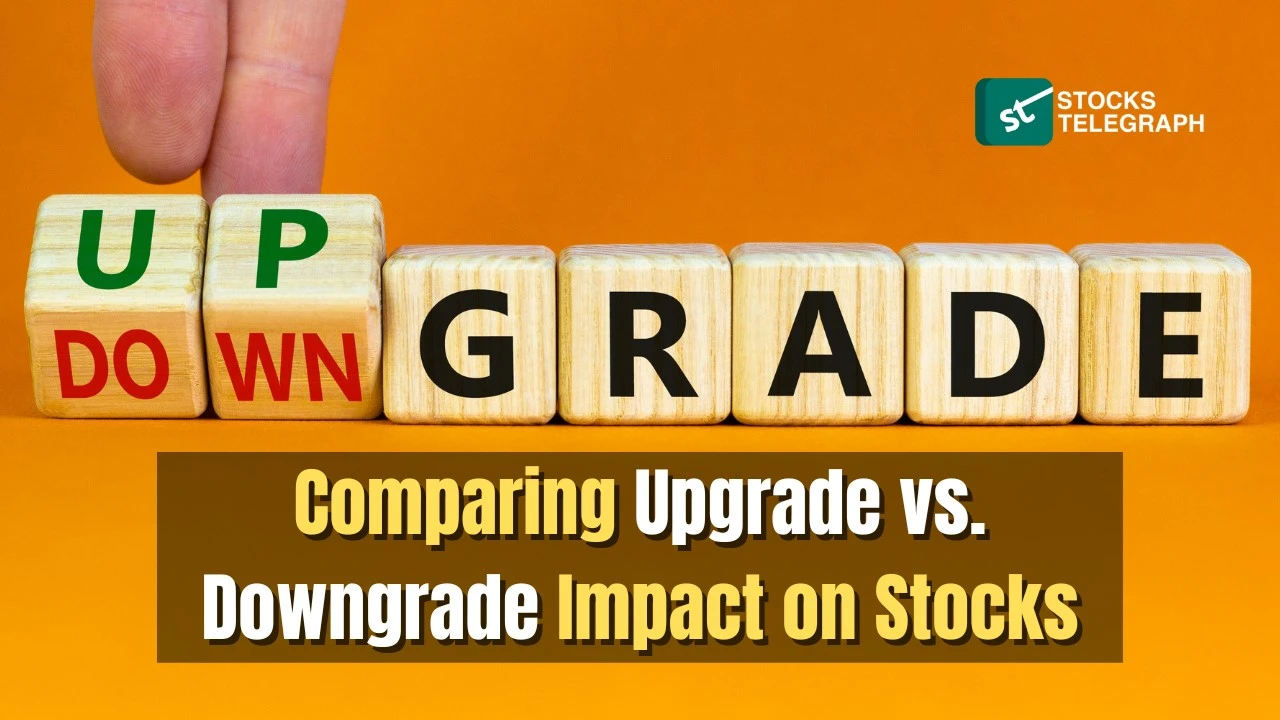
    In the dynamic world of stock investments, the decision between upgrade vs downgrade of a stock’s rating can send ripples through financial markets. Whenever financial analysts change their stance on a stock, the market watches closely.

    This article delves into the crucial question: How do upgrade vs downgrade impact stock prices? We’ll explore the significance of these rating changes, discussing their potential to influence investor sentiment, company valuation, and overall market trends.

    Our thesis posits that understanding the contrasting effects of stock upgrades and downgrades briefing is pivotal for investors seeking to navigate the stock market successfully.

    Understanding the Dynamics

    The decisions made in the stock market often hinge on the perceived value of a stock.

    This value is often influenced by a company’s performance as reflected in analyst recommendations, particularly upgrade vs downgrade.

    These assessments have a profound impact on investor sentiments and actions.

    1. Upgrade – A Confidence Booster

      When an analyst upgrades a stock, it sends a signal that the company’s prospects have improved.

      This can ignite a sense of optimism among investors, driving up demand and consequently, the stock’s price.

      Investors view upgrades as a vote of confidence, which can attract new buyers and boost existing shareholders’ morale.

    2. Downgrade – A Warning Sign

      Conversely, a downgrade suggests a diminishing outlook for a stock. It rings alarm bells for investors, who may start to question their holdings.

      Downgrades can lead to a sell-off as investors rush to exit before further losses occur. These negative perceptions can result in a significant drop in the stock’s price.

    Stock Price Impact

    When it comes to investing, it’s crucial to understand how upgrade vs downgrade can influence stock prices.

    Just like bond upgrades downgrades have their influence, these stock recommendations from analysts have a real impact, both in the short term and the long term.

    • Short-Term Impact

      • Immediate Price Reaction

        Imagine an upgrade of US stocks as a vote of confidence and a downgrade as a warning sign. When a company gets an upgrade, it usually experiences a quick uptick in its stock price.

        Conversely, downgrades often lead to immediate price drops because they raise concerns about the company’s future.

      • Volatility

        Following an upgrade or downgrade, brace yourself for some market turbulence. Traders and investors react swiftly, buying or selling shares, causing the stock price to swing.

        This short-term volatility can create opportunities for those seeking quick gains.

      • Trading Volume

        Upgrades and downgrades attract more investors, resulting in higher trading volumes. This surge in activity can amplify price movements, contributing to short-term fluctuations.

    • Long-Term Impact

      • Fundamental Changes

        The long-term picture hinges on fundamental shifts within the company.

        Upgrades typically follow improvements in a company’s financials, growth prospects, or other positive developments.

        These changes can set the stage for sustained growth in the stock price over time.

      • Market Sentiment

        Analyst recommendations influence market sentiment. Over the long term, positive upgrades can draw more investors, increasing demand for the stock.

        Conversely, downgrades can discourage investors and erode confidence, leading to a prolonged decline.

      • Investor Behavior

        Long-term investors often pay close attention to upgrades and downgrades when making decisions.

        Those who trust analysts may hold onto stocks after an upgrade, expecting them to perform well over time.

        Conversely, downgrades may prompt some investors to rethink their positions or sell, contributing to a prolonged decline.

      • Company Response

        Companies themselves respond to upgrades and downgrades. Positive reactions to upgrades, such as implementing growth strategies, can enhance the stock’s long-term prospects.

        Conversely, companies may take corrective actions in response to downgrades, aiming to rebuild investor confidence.

    Crafting A Winning Strategy

    As an investor, the way to win is to be prepared for any outcome, whether it is an upgrade vs downgrade.

    Ideally, the best thing to do would be to thoroughly study the fundamentals of a company such that you perceive downgrades well in advance.

    But the average investor will inevitably be faced with both upgrades and downgrades. The following are some useful tips towards crafting a winning strategy in this regard:

    1. Long-Term Perspective

      Don’t let short-term rating changes sway your long-term investment goals. Remember that upgrades and downgrades can often be influenced by temporary factors or market sentiment. Stick to your investment plan and evaluate the fundamentals of the companies in your portfolio.

    2. Research and Due Diligence

      Stay informed and do your own research. Don’t solely rely on analyst ratings. Understand the reasons behind the upgrade or downgrade, and assess whether it aligns with your investment thesis. Make sure to study upgrades downgrades history of stocks you consider to invest in.

    3. Risk Management

      Set stop-loss orders or establish predefined exit strategies to limit potential losses in case of adverse rating changes. Conversely, consider taking profits if a stock receives a significant upgrade and reaches your predetermined target price.

    4. Contrarian Approach

      Sometimes, downgrades can create buying opportunities, while upgrades can signal overvaluation. Consider a contrarian approach by evaluating stocks that have recently been downgraded for potential value. This approach would typically involve seeking out of top downgrade stocks.

    5. Stay Informed

      Keep an eye on market sentiment and news that could impact your investments. News and events can sometimes trigger rating changes. Being proactive in monitoring your portfolio can help you make informed decisions in buying top upgrades stocks.

    6. Professional Advice

      If you’re uncertain about how to react to upgrades and downgrades on stocks, consult with a financial advisor. They can provide personalized guidance based on your financial goals and risk tolerance.

    7. Emotional Discipline

      Emotions can cloud judgment when reacting to rating changes. Avoid impulsive decisions driven by fear or greed. Stick to your predetermined investment strategy.

    Frequently Asked Questions

    What Is the Difference in Upgrade Downgrade Meaning?

    A stock upgrade is when analysts raise their rating or target price for a stock, indicating positive prospects. A stock downgrade is the opposite, signaling a less favorable outlook.

    How Do Stock Upgrades and Downgrades Affect Stock Prices?

    Stock upgrades tend to drive prices higher as more investors buy in. Downgrades typically lead to price declines as investors sell.

    Should I Always Buy Stocks with Upgrades and Sell Those with Downgrades?

    Not necessarily. Consider the broader context, including your investment goals and the reasons behind the rating change. An upgrade downgrade tool can be a great complementary tool to give a holistic picture.

    Dao All Stock Upgrades and Downgrades Have an Immediate Impact?

    No, some may take time to fully influence the stock price as market participants digest the information.

    Are Upgrades and Downgrades Based Solely on Financial Performance?

    No, they can be influenced by various factors, including industry trends, macroeconomic conditions, and analyst opinions. So, for instance, Tesla upgrades downgrades may not have everything to do with its earnings releases.

    Can Upgrades or Downgrades Be Reversed Later?

    Yes, analysts can revise their ratings, so it’s important to stay updated on a stock’s outlook.

    Can Stock Upgrades or Downgrades Indicate a Buying or Selling Opportunity?

    Yes, they can signal potential opportunities, but it’s essential to conduct thorough research and not base decisions solely on ratings.

    What Role Does Market Sentiment Play in The Impact of Upgrades and Downgrades?

    Market sentiment can amplify the effect of ratings changes, leading to more significant price movements.

    How Can I Stay Informed About Stock Upgrades and Downgrades Relevant to My Portfolio?

    Use financial news sources, stock analysis platforms, and set up alerts for your portfolio to stay updated on rating changes that may impact your investments.

  • A Comprehensive Breakdown of the Recent Analyst Upgrade for ONON

    A Comprehensive Breakdown of the Recent Analyst Upgrade for ONON

    On Holding AG (NYSE: ONON) recently received a significant upgrade from financial analysts, marking a notable shift in the investment community’s perspective on the company’s future prospects.

    In the following sections, we will delve into the specifics of this analyst upgrade, the company’s ambitious growth strategies, and the potential effects on its financial performance.

    ONON’s Impressive Performance Since Its IPO

    On Holding AG, a Swiss performance sportswear brand, has made strong strides since its listing on the US stocks market (NYSE) in September 2021. The company has over-delivered on its IPO growth strategies, adding over CHF1bn in Net Sales during this period.

    ONON’s Future Outlook and Ambitions

    In the near future, ONON aims to continue its strong growth trajectory. The company intends to double its expected full-year 2023 net sales by 2026 and increase its adjusted EBITDA margin to 18%+. It seeks to build the most premium, global sportswear brand.

    The Three Pillars of ONON’s Growth Strategy

    ONON’s future growth path will be ignited by three strategic growth pillars:

    • Elevate: This involves further enhancing its market share in running, its brand awareness among its communities, and its performance credibility and sustainability impact.
    • Expand: This includes further expansion of its premium multi-channel distribution, its own retail presence, and its footprint in China.
    • Establish: This focuses on stepping into selected adjacencies, establishing its training community, and light up the tennis court, as well as establishing full head-to-toe looks across all its verticals.

    Financial Ambitions for 2026

    By 2026, ONON aims to achieve the following financial ambitions:

    • Double net sales between 2023 and 2026 to at least CHF 3.55 billion.
    • Exceed a 60% gross profit margin.
    • Reach an 18%+ adjusted EBITDA margin.

    ONON’s Exciting Product Pipeline

    The company has an exciting product pipeline that includes running, training, and tennis footwear and apparel. It sees huge opportunities to increase brand awareness and expand through a multi-channel approach.

    Long-term Targets for the Company

    Beyond the stated ambitions for 2026, the company aims to drive towards an apparel share of 10%+, an own retail share of 10%+, and a China share of 10%+ in relation to its overall net sales.

    Finally,

    The recent analyst upgrade for ONON signifies increased confidence in the company’s potential to continue its strong growth trajectory. The new rating is expected to influence investor decisions and market dynamics, contributing to the company’s promising future outlook.

  • Aramark Completes Spin-off of Vestis Corporation: Analysts Rating Update

    Aramark Completes Spin-off of Vestis Corporation: Analysts Rating Update

    On October 9, 2023, Aramark (ARMK) received an upgrade from Jefferies, switching its previous “Hold” rating to a more optimistic “Buy” rating. Alongside this rating upgrade, there was a significant adjustment in the price target, dropping from $44 to $29.

    This upgrade by Jefferies suggests a more positive outlook for Aramark’s stock, indicating increased confidence in its future performance. However, the lowered price target may also reflect changing US stocks market dynamics and expectations.

    Investors will likely keep a close eye on Aramark’s developments in light of this rating change as they assess its potential for growth and value in the market.

    Aramark, a globally recognized name in food and facilities management services, recently announced the spin-off of Vestis Corporation, which comprises Aramark’s uniform and workplace supplies business.

    A New Epoch for Aramark and Vestis

    This development is seen as a significant milestone for both Aramark (ARMK) and Vestis.

    The decision to spin-off Vestis allows Aramark to enhance its focus on its core strengths while providing Vestis with the opportunity to independently build long-term value through a focused commitment to serve customers and deliver on strategic priorities.

    Details of the Spin-off

    The spin-off was executed through distribution to Aramark stockholders of one share of Vestis common stock for every two shares of Aramark common stock held as of the close of business on September 20, 2023.

    Cash was delivered in lieu of any fractional shares of Vestis stock. Vestis shares were distributed at 12:01 a.m. Eastern Time on September 30, 2023.

    The advisory panel for the spin-off included Goldman, Sachs & Co. LLC, and J.P. Morgan Securities LLC as financial advisors, and Wachtell, Lipton, Rosen & Katz serving as legal counsel.

    Vestis Embarks on a New Journey

    Simultaneously, Vestis marks the beginning of an exciting new chapter as a standalone, public company.

    The management team at Vestis has outlined a clear pathway for value creation and the entire team is rallied around the purpose to empower people to do good work and good things for others while at work.

    Vestis at a Glance

    Vestis, now the second largest provider in the industry, operates with over 300,000 customer locations and approximately 20,000 employees across North America.

    The company’s comprehensive service offering ranges from uniforms and workwear, floor care (mats), towels, aprons, linen services to managed restroom supply services, and first aid and safety products.

    Impact on Analysts’ Rating

    The spin-off event has led to a revision in the analysts rating for both Aramark and Vestis. The analysts rating for Aramark is expected to see some fluctuations as the company repositions itself following the spin-off.

    Vestis, on the other hand, begins its journey as a public company with a clean slate, and its initial analysts rating will be closely watched by investors and market observers.

    Final Thoughts

    In conclusion, the spin-off of Vestis from Aramark is a significant market event with potential long-term implications for both companies.

    As the dust settles, the focus will be on how both companies navigate their respective paths and the impact of these developments on their respective analysts rating.