Tag: Warren Buffett

  • Is NU Stock Undervalued? Expert Analysis of Nu Holdings’ Financial Future

    Is NU Stock Undervalued? Expert Analysis of Nu Holdings’ Financial Future

    Unveiling NU’s Potential – Is It the Hidden Gem of 2025?

    Nu Holdings (NU) is making waves in the fintech space, emerging as one of the most innovative and disruptive players in digital banking and financial services. Founded in 2013, this Brazil-based fintech company has quickly gained traction in Latin America, offering a range of services from digital banking to credit cards, personal loans, and payment solutions. With its customer-centric approach and the ability to harness the power of technology, Nu is changing how people access and use financial services across the region.

    The central question remains: Is NU stock undervalued? With its rapid growth, expanding market share, and innovative business model, many investors and analysts are beginning to believe that the stock may be trading at a significant discount. As we look ahead to 2025, Nu Holdings could see even greater success as fintech adoption accelerates in emerging markets.

    In the following sections, we will delve into expert analysis, financial performance, and market trends to uncover why NU stock might be undervalued. We’ll explore its growth drivers, potential risks, and what investors can expect from this fintech giant moving forward.

    Breaking Down Nu Holdings: The Fintech Disruptor

    Nu Holdings (NU) has revolutionized the fintech space with its innovative business model, designed to make financial services more accessible, transparent, and user-friendly. Unlike traditional banks, Nu offers a digital-first approach, delivering its services primarily through its intuitive mobile app, which is available in multiple countries across Latin America, including Brazil, Mexico, and Argentina. By leveraging technology, Nu has eliminated many of the typical barriers to entry, offering low fees and simple, no-frills financial products.

    Key Services Driving Growth: Digital Banking, Credit Cards, and Loans

    At the core of Nu’s offerings are digital banking services, credit cards, and personal loans. Nu’s digital banking services provide customers with access to checking and savings accounts, along with innovative features such as real-time balance updates and automatic savings tools. The company’s credit cards have no annual fees and offer rewards, while its personal loans are offered at competitive interest rates, helping to bridge the gap for individuals who are typically underserved by traditional banks. These services are underpinned by AI-driven algorithms, which personalize the customer experience and improve financial outcomes.

    Comparing Nu Holdings’ Growth Trajectory with Competitors

    Nu’s growth trajectory has been remarkable, outpacing competitors like Chime, Revolut, and Square in Latin America. While Chime has dominated the U.S. market, and Revolut and Square have a significant presence in Europe and the U.S., Nu’s stronghold in Latin America positions it uniquely. The company has achieved massive scale, attracting millions of customers with its digital-first approach, gaining strong market share in a region that was previously dominated by legacy banks.

    Nu Holdings’ combination of innovation, customer-centric services, and a rapidly growing user base places it at the forefront of the fintech revolution.

    Is NU Stock Undervalued? The Case for Its Discounted Price

    As of February 28, 2025, Nu Holdings Ltd. (NU) is trading at $11.25 per share, reflecting a decline of approximately 1.8% from the previous close. Historically, Nu Holdings has demonstrated robust growth, with a Price-to-Earnings (P/E) ratio of 28.16, indicating a premium valuation compared to the finance sector average of 23.62. This suggests that while Nu Holdings is trading at a higher valuation than its peers, its strong profitability and manageable debt levels may justify this premium. The company’s Price-to-Book (P/B) ratio stands at 8.41, and it has a net profit margin of 27.8%, highlighting its efficiency and ability to maintain healthy margins. With an Earnings Per Share (EPS) of $0.22 and a debt-to-equity ratio of 21.5%, Nu Holdings is positioned relatively well regarding financial stability.

    Despite these strong financial metrics, Nu Holdings’ stock has experienced volatility, with the stock dropping 19% on February 21, 2025, largely attributed to macroeconomic challenges in Brazil rather than issues with the company’s fundamentals. This fluctuation in stock price has impacted investor sentiment, especially with concerns over broader market volatility and competition in the fintech sector. Analysts have mixed views on Nu Holdings’ valuation. Zacks Investment Research assigns a Value Score of D, suggesting the stock may be overvalued based on its current metrics. However, Macroaxis estimates the company’s real value at $12.87 per share, implying that the stock could be undervalued at its current price of $11.25.

    While some metrics indicate that Nu Holdings could be trading at a premium, others suggest it is undervalued. This presents a complex investment opportunity, as strong financial performance and growth potential are balanced against market volatility. Investors should consider these factors, as well as broader economic conditions, when evaluating whether NU stock is truly undervalued.

    The Numbers Speak: Financial Health and Future Earnings Potential

    Recent Financial Performance

    In 2024, Nu Holdings reported a 58% year-over-year revenue growth, reaching $11.5 billion. The company’s net income nearly doubled from the previous year, totaling $2.0 billion. The gross profit margin stood at 45.6%, indicating strong profitability.

    Future Earnings Growth

    Nu Holdings has demonstrated consistent growth, with a 22% increase in its customer base in 2024, reaching a total of 114.2 million customers. The company’s lending portfolio more than doubled during the year to $6.1 billion, a 22% sequential increase. These metrics suggest a strong foundation for future earnings growth.

    Strategic Investments and Partnerships

    In April 2024, Nu Holdings increased its investment in the Mexican market to over $1.4 billion, aiming to support portfolio expansion and strengthen its presence across all segments of the Mexican financial market. This strategic investment is expected to significantly impact Nu’s earnings by enhancing its market share and customer base in Mexico.

    Comparison with Fintech Peers

    Compared to its fintech peers, Nu Holdings has demonstrated robust financial performance. The company’s net income for 2024 was $2.0 billion, nearly doubling from the previous year. This growth trajectory positions Nu Holdings favorably in the fintech sector, indicating its potential for continued expansion and profitability.

    In summary, Nu Holdings’ strong financial performance, strategic investments, and consistent growth metrics underscore its potential for sustained earnings growth. The company’s expansion into new markets and its increasing customer base further enhance its position for future success.

    What Drives NU’s Growth? Key Catalysts for Future Performance

    Market Opportunity in Latin America and Emerging Markets

    Nu Holdings Ltd. (NU) has strategically positioned itself in Latin America, a region with a significant unbanked and underbanked population. As of early 2025, the company has expanded its operations to Brazil, Mexico, and Colombia, serving over 100 million customers. This vast market presents substantial growth opportunities, especially as traditional banking services often overlook these segments.

    Economic and Digital Trends

    The fintech sector in Latin America is experiencing rapid growth, driven by increased mobile banking adoption and a push for financial inclusion. Approximately 700 fintech companies are operating in Mexico alone, challenging traditional banks and offering innovative financial solutions. This digital transformation is reshaping the financial landscape, creating a favorable environment for fintech companies like Nu Holdings.

    Nu’s Technology and Customer-Centric Approach

    Nu Holdings leverages advanced technology to deliver seamless and user-friendly financial services. The company employs a microservice architecture primarily written in Clojure, ensuring scalability and resilience. Additionally, Nu’s customer-centric culture focuses on understanding and meeting customer needs, prioritizing products and services that create extraordinary customer experiences. This approach has led to high customer satisfaction and retention rates, driving engagement and acquisition.

    In summary, Nu Holdings’ strategic focus on the Latin American market, alignment with digital and economic trends, and commitment to technological innovation and customer satisfaction are key drivers of its growth and future performance.

    Risks and Challenges: What Could Derail Nu Holdings’ Growth?

    Nu Holdings Ltd. (NU) has experienced significant growth in the fintech sector, particularly in Latin America. However, several external and internal factors could potentially impede its future performance.

    External Risks

    • Regulatory Challenges: Operating across multiple countries exposes Nu Holdings to diverse regulatory environments. Changes in financial regulations, data protection laws, or tax policies could impact its operations and profitability.
    • Macroeconomic Factors: Economic downturns, currency fluctuations, and inflation in key markets like Brazil and Mexico can affect consumer spending and loan repayment rates, posing risks to Nu Holdings’ financial stability.

    Internal Risks

    • Competition: The fintech landscape is highly competitive, with numerous players offering similar services. Nu Holdings faces competition from both traditional banks and emerging fintech startups, which could pressure its market share and profitability.
    • Market Saturation: As Nu Holdings expands its customer base, it may encounter challenges in maintaining growth rates, especially in mature markets where customer acquisition becomes more difficult.

    Impact of Economic Downturns and Consumer Behavior Changes

    Economic downturns can lead to increased unemployment and reduced disposable income, affecting consumers’ ability to repay loans and diminishing demand for financial products. Additionally, shifts in consumer behavior, such as a preference for traditional banking methods over digital platforms, could impact Nu Holdings’ customer acquisition and retention strategies.

    Technological Disruption

    The rapid pace of technological advancement in the fintech sector means that Nu Holdings must continually innovate to stay competitive. Failure to adopt new technologies or respond to disruptive innovations could result in a loss of market relevance.

    Mitigation Strategies

    Nu Holdings’ leadership, under CEO David Vélez, emphasizes a customer-centric approach and continuous innovation to address these challenges. The company’s strategic initiatives, such as expanding into new markets and diversifying its product offerings, aim to mitigate the risks associated with market saturation and competition.

    In summary, while Nu Holdings faces several risks that could impact its growth trajectory, its proactive strategies and strong leadership position it to navigate these challenges effectively.

    Expert Opinions: Why Analysts Are Bullish on NU’s Future

    Analyst sentiment towards Nu Holdings Ltd. (NU) remains optimistic, with an average 12-month price target of $15.56, indicating a potential upside of approximately 37.8% from the current price of $11.25. Price targets vary, with estimates ranging from a low of $9.00 to a high of $19.00, reflecting diverse perspectives on the company’s future performance.

    Bullish Perspectives

    Several financial institutions have expressed confidence in Nu Holdings’ growth prospects:

    • Berkshire Hathaway: Warren Buffett’s investment firm holds a significant stake in Nu Holdings, underscoring its belief in the company’s long-term potential.
    • ARK Invest: Cathie Wood’s firm has also invested in Nu Holdings, indicating a positive outlook on the fintech sector and Nu’s position within it.

    Cautious Views

    Despite the optimism, some analysts advise caution:

    • Market Volatility: The fintech industry is subject to rapid changes and regulatory challenges, which could impact Nu Holdings’ performance.
    • Competitive Landscape: Intense competition from both traditional banks and emerging fintech companies may pressure Nu Holdings’ market share and profitability.

    Institutional Investment Trends

    Institutional investors hold approximately 84.02% of Nu Holdings’ stock, reflecting strong confidence in the company’s future. Notable institutional investors include Capital Research Global Investors, Baillie Gifford & Co., and BlackRock Inc., among others.

    Expert Predictions

    Analysts forecast Nu Holdings’ earnings per share (EPS) to reach $0.57 in 2025, with estimates ranging from $0.51 to $0.63. Revenue projections for 2025 average around $11.5 billion, with a range from $10.5 billion to $12.5 billion. These figures suggest robust growth, supported by the company’s expanding customer base and innovative financial products.NU EPS

    In summary, while there are varying opinions on Nu Holdings’ future, the prevailing sentiment among analysts and institutional investors is positive, highlighting the company’s strong market position and growth potential in the fintech sector.

    The Bigger Picture: Nu Holdings’ Role in the Fintech Revolution

    Nu Holdings Ltd. (NU), the parent company of Nubank, is firmly positioned at the forefront of the fintech revolution. With its strategic vision focused on expansion, technological innovation, and global reach, Nu is making significant strides in the rapidly evolving financial services landscape. As of 2024, Nu Holdings has increased its customer base by 22%, reaching over 114 million customers across Brazil, Mexico, and Colombia. The company’s “Three Act Strategy” includes plans to build the largest and most beloved retail banking franchise in Latin America, expand beyond traditional financial services, and establish itself as a global, AI-driven digital banking model. This ambitious expansion is designed to propel Nu Holdings into new markets, with the aim of making a significant impact globally, especially in underserved regions.

    Technological Innovations Driving Growth

    At the heart of Nu’s growth are its cutting-edge technological innovations. The company uses artificial intelligence (AI) to personalize banking experiences, improving customer engagement and loyalty. Nu is also integrating blockchain technology to enhance security and transparency in digital transactions, reducing fraud and building trust among users. In addition, the company embraces open banking principles, allowing third-party developers to create applications and services that are seamlessly integrated with its platform, fostering a more inclusive and connected financial ecosystem.

    Nu’s Impact on the Global Financial Ecosystem

    Nu Holdings’s impact extends beyond just its market share. By providing accessible, transparent, and low-cost financial services, the company is driving financial inclusion, especially in Latin America, where many people remain unbanked. As it continues to expand into new regions and adopt advanced technologies, Nu Holdings is setting new standards in the financial sector and influencing the global financial ecosystem. In conclusion, Nu Holdings’ innovative strategies and commitment to financial inclusion underscore its crucial role in the fintech revolution and its potential to reshape the global financial landscape.

    Conclusion: Should You Buy NU Stock in 2025? Final Thoughts on Valuation and Future Growth

    Nu Holdings (NU) has shown strong financial growth, increasing revenue by 58% year-over-year to $11.5 billion and expanding its customer base to over 114 million across Latin America. With its focus on AI-driven financial services, strategic expansion into new markets, and innovative banking solutions, the company is well-positioned for sustained growth in 2025. Despite short-term volatility, analysts maintain a bullish outlook, with an average price target of $15.56, signaling a potential upside of 37.8%.

    Given its undervalued stock price, solid fundamentals, and expanding fintech ecosystem, NU stock presents an attractive investment opportunity for long-term investors looking to capitalize on the growth of digital banking in emerging markets. While risks like regulatory challenges and macroeconomic fluctuations exist, Nu’s strong financial position, technological innovations, and market leadership make it a compelling buy for 2025.
  • Chubb Shares Surge as Berkshire Hathaway Reveals Major Stake

    Chubb Shares Surge as Berkshire Hathaway Reveals Major Stake

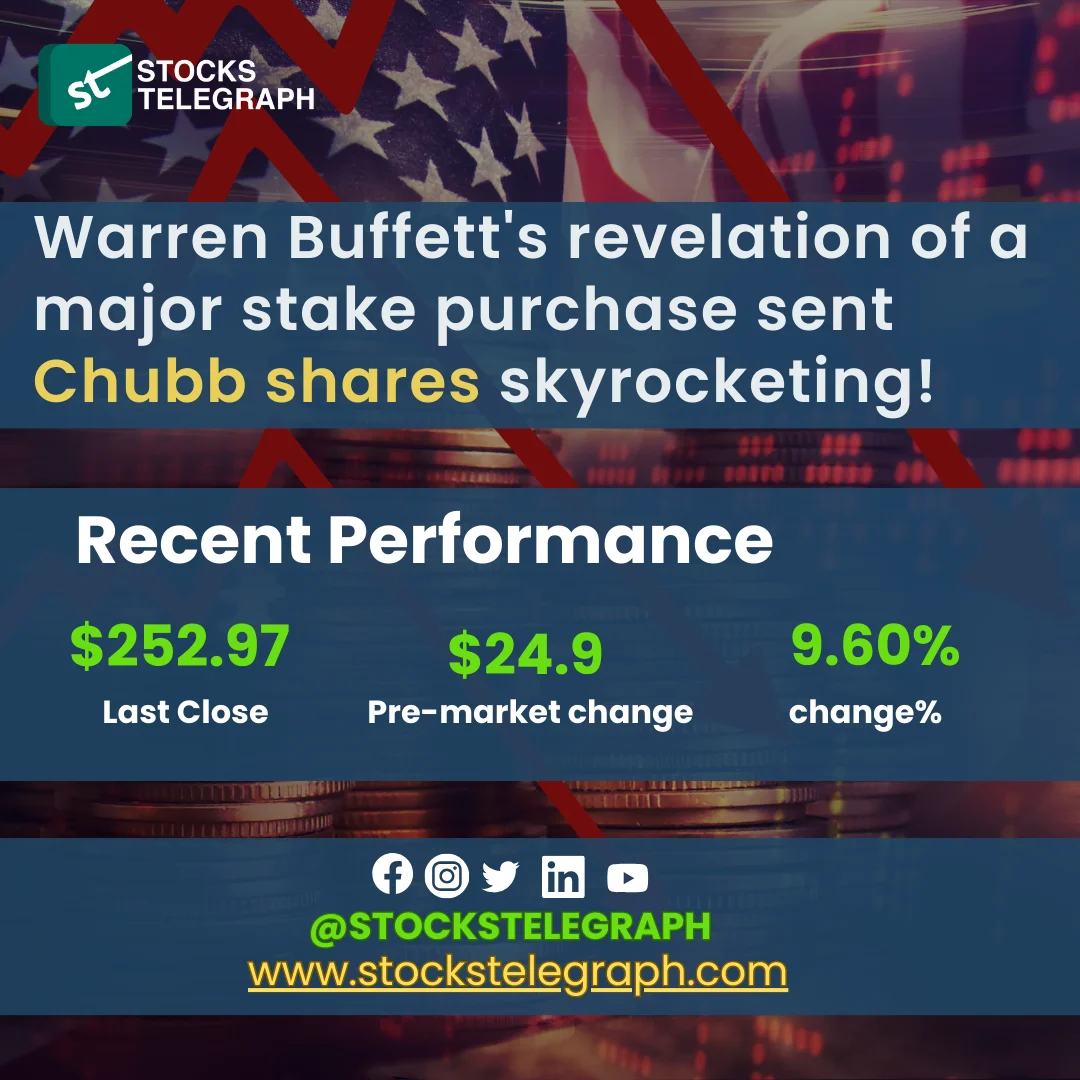
    Chubb Ltd. (CB) exhibited notable pre-market performance today, with its share price reaching $277.09, marking a significant rise of $24.12 or 9.53%. The transaction involved 16.75K shares, reflecting robust investor interest and a positive outlook towards the insurance heavyweight. This surge is particularly noteworthy as it suggests growing confidence among investors, potentially spurred by recent strategic developments within the company or favorable news within the industry.

    Magic behind this Surge

    The reason behind this spike became apparent when Berkshire Hathaway, led by Warren Buffett, disclosed a major acquisition of Chubb shares in a Securities and Exchange Commission filing for the first quarter. Berkshire Hathaway has purchased nearly 26 million shares, amounting to an investment of approximately $6.7 billion. This strategic move, previously kept under wraps through “confidential treatment” requested by Berkshire from the SEC, has significantly influenced Chubb’s market dynamics.

    Moreover, Chubb was recently in the spotlight for underwriting a nearly $92 million appeal bond for former President Donald Trump in a defamation case filed by E. Jean Carroll. This move aligns with Warren Buffett’s well-known investment strategy and places Chubb in the company of other insurance giants within the Berkshire Hathaway portfolio, such as Geico and General Re.

    In line with Buffett’s ongoing strategy adjustments, there has been a notable shift within Berkshire’s investment focus. The conglomerate has increased its stakes in financial entities like Ally Financial, American Express, and Bank of America, while simultaneously reducing its exposure to consumer goods. Noteworthy changes include the sale of 10 million Apple shares, despite it remaining Berkshire’s largest holding, and a significant reduction of its stake in HP by 80 million shares last quarter, slashing the investment by 78%. These strategic decisions underscore a broader pivot towards prioritizing investments in the financial and insurance sectors, reflecting Berkshire Hathaway’s adaptive investment approach in response to evolving market conditions.

  • List Of Warren Buffet Stocks to Watch in 2023

    List Of Warren Buffet Stocks to Watch in 2023

    92-year-old billionaire investor, Warren Buffett, is one of the few individuals whose decisions directly influence the direction of the financial markets.

    Analysts, traders, as well as economists closely track which assets the man’s multinational investment conglomerate, Berkshire Hathaway (NYSE: BRK-A) buys and sells.

    Stocks Warren Buffett buys and sell has a proven track record of making him an investor kingpin, by committing to the value investing philosophy.

    This has yielded him phenomenal success over the years.

    Since 1965, the S&P 500 delivered an average return of 10% per annum, whereas Berkshire Hathaway earned a double of 20% gains per year, during the same time period.

    For this reason, it comes as no surprise that many in the market look up to Warren Buffett, and what he is up to, in regard to his investment decisions.

    These transactions provide guidance as to which stocks showcase promise, and which ones are no longer worth Warren Buffett’s top holdings.

    Here we present 5 crucial holdings from a list of Warren Buffett stocks.

    What Is Berkshire Hathaway?

    Berkshire Hathaway is a renowned multinational conglomerate, led by iconic investor Warren Buffett.

    Founded in 1839, it began as a textile manufacturing company before transforming into a diverse holding company.

    Today, Berkshire Hathaway owns a vast portfolio of businesses spanning insurance, utilities, manufacturing, and more.

    Its success lies in a unique investment philosophy that focuses on acquiring stable, long-term businesses with strong management and competitive advantages.

    Berkshire’s annual shareholder meetings have become legendary gatherings, attracting investors worldwide.

    The company’s name symbolizes reliability, value, and shrewdness, making it an influential force in the financial world and a testament to Buffett’s exceptional business acumen.

    How Does Warren Buffett Pick Stocks?

    Warren Buffett, renowned as the “Oracle of Omaha,” employs a distinctive and disciplined approach to stock picking.

    The investment mogul prioritizes companies with durable competitive advantages, strong management, and proven track records.

    He emphasizes long-term value over short-term gains, seeking businesses he understands and believes will thrive for years.

    Buffett focuses on intrinsic value, assessing a company’s potential through its assets, earnings, and future prospects.

    His patient strategy avoids market speculation and instead targets undervalued stocks with stable growth potential.

    By sticking to industries, he comprehends and avoids complex derivatives, Buffett’s simplicity and foresight have earned him enduring success in the investment world.

    How Do You Calculate the Intrinsic Value of a Stock?

    Calculating the intrinsic value of a stock is vital for informed investing. It involves evaluating the company’s financials, growth prospects, and market conditions to estimate its true worth.

    Analysts use various methods, such as discounted cash flow (DCF) analysis and price-to-earnings (P/E) ratios.

    DCF assesses future cash flows and discounts them back to present value, while P/E ratios compare the stock price to earnings per share.

    Other factors like dividends, management quality, and competitive advantages are also considered. Ultimately, the intrinsic value is subjective and requires sound judgment.

    It aids investors in determining whether a stock is undervalued, overvalued, or priced fairly, guiding their investment decisions.

    How Many Stocks Does Warren Buffett Own?

    Berkshire holds a diversified portfolio worth $378 billion with a list of Warren Buffett stocks of around 50 companies.

    His investment strategy focuses on companies with strong fundamentals and competitive advantages.

    While some of his major holdings include Apple, Coca-Cola, and Bank of America, the portfolio of Warren Buffett evolves as he seeks promising long-term opportunities in the market.

    Should You Follow Buffett’s Moves?

    Following Buffett’s moves can be insightful, but exercise caution. His strategies may not fit everyone’s risk tolerance or financial goals.

    Understand his long-term approach and adapt it to your circumstances. Remember, individual research and analysis is vital for making informed investment decisions.

    Trust your instincts, but be wary of blindly mirroring any investor’s actions.

    How To Use Warren Buffett Stocks to Find Investment Ideas

    Warren Buffett’s investment philosophy revolves around seeking undervalued companies with strong fundamentals and long-term growth potential.

    Learning from Buffett’s approach can provide valuable insights for finding promising investment ideas choosing companies from list of Warren Buffett stocks.

    • Research Buffet’s Holdings

      Begin by analyzing the portfolio of Warren Buffett. His publicly disclosed investments can be found in regulatory filings like the 13F form.

      Identify the sectors and specific companies he has invested in, as this can highlight industries, he deems promising.

    • Focus On Quality and Value

      Buffett prioritizes companies with a competitive advantage, robust financials, and a history of consistent earnings.

      Look for businesses with durable moats, sustainable business models, and attractive valuations relative to their intrinsic worth.

    • Assess Long-Term Prospects

      Buffett’s investments are typically made with a long-term perspective. Consider companies that have the potential for steady growth and can withstand market fluctuations.

    • Analyze Dividend History

      Buffett has an affinity for dividend-paying stocks. Focus on companies with a track record of increasing dividends, as this can indicate financial stability and management confidence.

    • Understand Economic Moats

      Buffett coined the term “economic moat” to describe a company’s competitive advantage.

      Look for businesses with barriers to entry, strong brand recognition, and unique offerings that set them apart from competitors.

    • Embrace Patience

      Buffett advises investors to have patience and discipline. Don’t rush into decisions; take time to thoroughly evaluate potential investments.

    Warren Buffett’s Investment Strategy

    Warren Buffett’s investment strategy is grounded in value, patience, and a deep understanding of businesses, creating a blueprint for long-term success in the world of finance.

    • Value Investing

      Warren Buffett is renowned for his value investing approach. He seeks undervalued companies with strong fundamentals, focusing on intrinsic value rather than short-term market trends.

    • Long-Term Perspective

      Buffett’s strategy revolves around the long-term holding of investments. He believes in the power of compounding and remains patient, allowing his investments to grow steadily over time.

    • Moat Investing

      Buffett looks for companies with a competitive advantage or a wide economic moat, enabling them to withstand competition and generate sustainable profits.

    • Circle of Competence

      Staying within his circle of competence, Buffett invests in industries and businesses he understands thoroughly, avoiding complex sectors.

    • Contrarian Thinking

      Buffett embraces contrarian views, buying when others are fearful and selling when optimism is excessive, capitalizing on market fluctuations.

    • Capital Allocation

      Efficient capital allocation is vital to Buffett’s strategy. He reinvests profits wisely or returns excess cash to shareholders through dividends or buybacks.

    • Avoiding Speculation

      Buffett shuns speculative investments and favors businesses with proven track records and consistent earnings.

    • Margin Of Safety

      Buffett emphasizes the importance of a margin of safety when making investment decisions, reducing the risk of capital loss.

    • Emotion Control

      Buffett advocates rational decision-making, detaching emotions from investments, and staying disciplined during market volatility.

    • Continuous Learning

      Despite his success, Buffett is a perpetual student, always seeking to expand his knowledge and adapt to changing market conditions.

    Warren Buffett & Dividend Stocks

    Warren Buffett has long been a proponent of investing in dividend stocks. With a remarkable track record, he exemplifies the power of patience and compounding returns.

    Emphasizing companies with stable cash flows, he seeks dividends that provide a steady income stream.

    Buffett’s strategy revolves around holding quality businesses for the long term, benefiting from their consistent dividend payouts.

    He believes that such stocks can weather market turbulence and offer a buffer against volatility.

    Buffett’s advice echoes the importance of research and understanding a company’s fundamentals before investing.

    His timeless wisdom reminds us that dividend stocks offer not only financial gains but also a sense of security.

    In a world of fast-paced investments, Warren Buffett’s approach remains timeless, emphasizing the value of dividend stocks as a solid foundation for building lasting wealth.

    List of Warren Buffet Stocks to Know About

    1. Apple Inc (AAPL)

      Warren Buffett has a significant stake in Apple Inc (NASDAQ: AAPL), accounting for a substantial 46.44% of Berkshire Hathaway’s portfolio.

      The stake of the conglomerate in AAPL from a list of Warren Buffett stocks is valued at approximately $151 billion.

      Demonstrating his confidence in the tech giant, Buffett recently acquired an additional 20.42 million Apple stocks at an average price of $39.59 per share.

      Remarkably, the current price of AAPL stands at a staggering 394.1% higher than the acquisition price.

      Apple has shown impressive growth, reflecting a 12-month performance increase of 19% and an outstanding year-to-date performance of nearly 49%.

      These figures underscore the company’s strong market presence and its ability to thrive in the dynamic tech industry.

      Buffett’s unwavering support for Apple emphasizes the company’s promising prospects.

      It also solidifies its position as one of the most valuable assets in Berkshire Hathaway’s diverse investment portfolio.

    2. Bank of America Corporation (BAC)

      The second-largest investment of Berkshire Hathaway in list of Warren Buffett stocks is Bank of America Corporation (NYSE: BAC).

      BAC makes up 9.09% of its portfolio with a value of about $29.54 billion.

      Warren Buffett increased his stake by purchasing an additional 22.75 million BAC shares at an average price of $25.78 per share.

      Remarkably, the current price of BAC has soared by 22.7% since the acquisition.

      Bank of America stands out in the United States, providing unmatched convenience to approximately 68 million consumers and small businesses.

      With around 3,900 retail financial centers, 15,000 ATMs, and 57 million verified digital users, it offers award-winning digital banking services.

      Despite the recent weaker performance, witnessing a 12-month growth decline of -7.52% and a year-to-date drop of nearly 5.87%, Bank of America remains strong in the market.

      This success attests to Buffett’s shrewd investment decisions and BAC’s solid market position.

      As a prominent player in the financial sector, Bank of America continues to be a vital part of Berkshire Hathaway’s investment strategy.

    3. American Express Company (AXP)

      The significant stake in American Express Company (NYSE: AXP) makes it one of Berkshire’s major holdings.

      The investment in the list of Warren Buffett stocks comprises 7.69% of the conglomerate’s portfolio and is valued at approximately $5.01 billion.

      With unwavering confidence, Buffett maintained his AXP stock at an average price of $71.11 per share.

      Presently, the stock has skyrocketed to about 138.6% above the average purchase price.

      The company already has strong institutional ownership, indicating analysts’ favorable views of the stock. Berkshire Hathaway Inc. stands as the largest shareholder with a 21% stake.

      American Express’s premium customer base contributes to its resilience as these clients generally have high credit scores.

      Moreover, the stock has exhibited robust performance, witnessing an 8.67% increase over the past year and an impressive year-to-date surge of 12.77%.

      These figures highlight the company’s sustained growth and continued market appeal.

      As the third-largest credit card network, AXP’s success aligns perfectly with Buffett’s long-term investment philosophy.

    4. Occidental Petroleum Corporation (OXY)

      The primary petroleum investment of Berkshire in list of Warren Buffett stocks lies in Occidental Petroleum Corporation (NYSE: OXY).

      The stock occupies a significant 4.01% of Berkshire’s portfolio of worth $13 billion.

      Impressively, he has expanded his stake by 12.42 million OXY stocks, obtained at an average price of $51.21, now seeing a remarkable 22.30% increase in the stock’s value.

      Despite a modest -5.73% decline in performance over the past year; Occidental shows a somewhat improved year-to-date performance with a loss of -2.38%.

      Nevertheless, it remains a favored energy play for savvy investors due to its involvement in acquiring and exploring oil and gas properties across key regions around the globe.

      The company’s recent declaration of a steady quarterly dividend of $0.18 per share reaffirms its resilience.

      It also strengthens OXY’s status as a top choice for investment by Warren Buffett’s conglomerate.

    5. The Kroger Co. (KR)

      Kroger Co. (NYSE: KR) from the list of Warren Buffett stocks makes a mere 0.76% stake in Berkshire Hathaway’s portfolio.

      The stake however solidifies its position with Warren Buffett’s third-largest institutional holding in the firm.

      The investment, valued at a staggering $2.47 billion, remains unchanged as Buffett has not increased his stake further.

      Buffett holds 50 million KR stocks, purchased at an average price of $32.22 per share, and the current price of Kroger is remarkably 50.7% above the average purchase price.

      KR has shown impressive growth, boasting a 12-month return of 4.88% and an outstanding year-to-date performance of nearly 10%.

      This success can be attributed to Kroger’s proactive efforts in adapting to consumer preferences.

      The company continuously introduces innovative products and invests in technology to enhance its omnichannel capabilities, providing customers with a seamless shopping experience.

      Buffett’s steadfast confidence in Kroger highlights its enduring value and potential for sustained growth, making it a crucial part of his investment strategy.

      As the grocery sector evolves, Kroger remains an appealing choice for investors seeking stable returns and long-term appreciation.

      The figures underscore the tech giant’s resilience and attractiveness as a reliable investment option.

    Moreover, we have compiled 20 of the best investment options from a list of Warren Buffett stocks. We believe that these stocks are likely to outperform the market in the long run.

    Diversifying your investment with a portfolio of Warren Buffett with some of these stocks is an excellent way to ensure better returns.

    Investing in them is your chance to benefit from the legendary investor’s expertise.

    Sr # Ticker Company Name % of Portfolio Shares Owned Value
    1 KO Coca Cola Co 7.63% 400M $ 24.81B
    2 CVX Chevron Corp New 6.65% 132.41M $ 21.60B
    3 KHC Kraft Heinz Co 3.87% 325.63M $ 12.59B
    4 MCO Moodys Corp 2.32% 24.67M $ 7.55B
    5 HPQ Hp Inc 1.09% 120.95M $ 3.55B
    6 DVA Davita Inc 0.90% 36.10M $ 2.93B
    7 VRSN Verisign Inc 0.83% 12.82M $ 2.71B
    8 C Citigroup Inc 0.80% 55.24M $ 2.59B
    9 PARA Paramount Global 0.64% 93.73M $ 2.09B
    10 V Visa Inc 0.58% 8.30M $ 1.87B
    11 GM General Mtrs Co 0.45% 40M $ 1.47B
    12 MA Mastercard Incorporated 0.45% 3.99M $ 1.45B
    13 CHTR Charter Communications Inc 0.42% 3.83M $ 1.37B
    14 AON Aon Plc 0.42% 4.33M $ 1.37B
    15 ATVI Activision Blizzard Inc 0.38% 14.66M $ 1.24B
    16 AMZN Amazon Com Inc 0.34% 10.55M $ 1.09B
    17 CE Celanese Corp Del 0.30% 8.82M $ 960.30M
    18 COF Capital One Financial Corp 0.29% 9.92M $ 954.10M
    19 SNOW Snowflake Inc 0.29% 6.13M $ 945.08M
    20 MCK Mckesson Corp 0.25% 2.29M $ 815.31M

    3 Warren Buffett Stocks to Avoid Today

    Listed below are three Warren Buffett stocks to avoid today as the conglomerate recently sold its entire stakes in these companies.

    Buffett may have decided to sell these stocks because they have become too risky for his current portfolio.

    1. US Bancorp (USB)

      Despite being one of Warren Buffett’s top holdings for long term, caution is advised with US Bancorp (NYSE: USB) today due to potential challenges in the financial sector.

      Rising interest rates and increasing competition from fintech disruptors may impact profitability.

      Additionally, the bank’s heavy exposure to commercial real estate loans raises concerns in uncertain economic conditions.

    2. Taiwan Semiconductor Manufacturing Limited (TSM)

      While a leading semiconductor manufacturer, Taiwan Semiconductor Manufacturing Limited (NYSE: TSM) faces heightened risks amidst ongoing global chip shortages.

      Any disruptions in the supply chain could hinder production and result in revenue uncertainties.

      Furthermore, increased competition from emerging players may erode TSM’s market share and profitability in the long run.

    3. The Bank of New York Mellon Corp (BK)

      Despite its status as a major custodian bank, The Bank of New York Mellon Corp (NYSE: BK) confronts challenges from technological disruptions, which could impact its traditional business.

      Additionally, low-interest rates may constrain its interest-based revenue, while regulatory pressures and market volatility pose risks to its asset management services.

      Investors should exercise caution with BK in the current market climate.

    Buffett’s Methodology

    Warren Buffett has built his investment philosophy on a unique set of principles that have proven successful over the years.

    His methodology centers on long-term value investing, focusing on fundamentally strong companies with competitive advantages and sustainable business models.

    Several key aspects guide Buffett’s investment decisions:

    • Company Performance

      Buffett seeks companies with consistent and predictable performance over time. He looks for businesses with a history of stable earnings, strong cash flow, and a track record of growth.

      Buffett emphasizes understanding a company’s financials thoroughly, ensuring that its fundamentals align with his investment criteria.

    • Company Debt

      Buffett is cautious about investing in companies with excessive debt. He prefers businesses with manageable debt levels and sufficient liquidity to weather economic downturns.

      High levels of debt can hinder a company’s ability to invest in growth opportunities and may pose significant risks during challenging economic periods.

    • Profit Margins

      Buffett focuses on companies with healthy profit margins and sustainable competitive advantages.

      Businesses with wide economic moats, i.e., strong barriers to entry, are particularly attractive to him as they offer protection against competitors and can maintain higher profitability.

    • Is the Company Public?

      Buffett predominantly invests in publicly traded companies and his investment decisions are driven by publicly available information.

      He often takes substantial stakes in these companies, sometimes becoming one of the largest shareholders.

    • Is It Cheap?

      Buffett famously advocates buying undervalued stocks at a discount to their intrinsic value. He looks for companies whose stock prices are trading below their estimated true worth.

      This value investing approach allows him to capitalize on potential long-term gains when the market eventually recognizes the underlying value of the company.

    Conclusion

    Warren Buffet, as widely acknowledged, stands as the unparalleled, supreme long-haul financier in history.

    Being among the wealthiest individuals globally with a self-achieved total value, his methodology demands no convincing.

    For someone who has triumphed consistently over the market, he offers substantial direction for all investors.

    The stocks he purchases and divests unveil insights into his investment principles and future-oriented mindset. They highlight potential prospects to pursue and obstacles to avoid.

    FAQs

    How Did Warren Buffett Become Rich?

    Warren Buffett amassed his fortune through savvy investment strategies and shrewd decision-making.

    Starting as a young entrepreneur, he bought undervalued stocks, fostering long-term growth.

    His Berkshire Hathaway conglomerate, acquiring diverse companies, exponentially increased his wealth.

    His disciplined approach, avoiding risky ventures, earned him the nickname “Oracle of Omaha.” Buffett’s unique insights and patience have made him one of the wealthiest individuals globally.

    Is Warren Buffett Self-Made?

    Warren Buffett is often considered self-made due to his exceptional financial success and investment acumen.

    He started as an entrepreneur at a young age, selling newspapers and creating businesses.

    Buffett’s keen intellect, disciplined approach, and long-term vision enabled him to build his vast wealth independently.

    What Is the Best Investment According to Warren Buffett?

    Warren Buffett emphasizes that the best investment is in oneself. He believes acquiring knowledge, skills, and continuous learning pays the highest dividends.

    Apart from self-improvement, he advocates for long-term investments in undervalued companies with strong fundamentals and competent management.

    Buffett’s approach involves patience, discipline, and a focus on intrinsic value rather than short-term market fluctuations.

    Who Owns the Most Shares of Berkshire Hathaway?

    Warren Buffett, the CEO of Berkshire Hathaway, owned the largest stake in the company.

    With his astute investment decisions over the years, he accumulated a significant portion of the company’s shares.

    For owing around 30% of the stake in the company makes him the majority shareholder and the driving force behind the conglomerate’s success.

  • Stock investing strategies; Benjamin Graham and Warren Buffett

    Everyone in this world invests in some sort of security to get higher returns and maximize their wealth. The stock market is one of the most treasured places to invest capital. Let’s have a look at some prominent ways of stock investing and, of course, how Warren Buffett has invested over the past decades.

    The best thing about investing strategies is that they are flexible. If an investor chooses one and it does not suit their risk tolerance or schedule, they can certainly make changes. But doing so can be costly. Every purchase carries a fee. Selling assets can create a realized capital gain. These gains are taxable and, therefore, expensive. So, you need to be careful about it.

    Before you commit your money, you need to answer the question, what type of investor you are?

    When you will open an account at any brokerage firm, you will be asked about your investment goals. Certainly, the brokers will ask if you are a risk-taker or risk-averse. And, if you are a risk-taker, how much risk you’re willing to take on.

    “A key rule of thumb to keep in mind with any stock market strategy: Don’t invest cash you’ll need within five years.”

    Some investors want to take an active hand in managing their money’s growth, and some prefer to “set it and forget it”. If you are new, you must stay active and learn the art of investing and somewhat trading as well.

    Warren Buffett is a modern time great and an inspiration to many of us when it is about distributing your capital in the stock market and maximizing your wealth. Before reaching out on Buffet’s ‘buy and hold investing strategy, it is important to introduce the father of value investing himself, Benjamin Graham.

    Graham, a British-born American economist, professor, and investor, was one of the first people to use financial analysis to Stock investing, doing it successfully. Graham first shared in his 1949 version of “The Intelligent Investor.” Investors are still using his strategies as of today.

    Before jumping into the investing strategies of Benjamin, let’s give a brief introduction to who Benjamin Graham was and what led to his five common stock investing formulas.

    Graham addresses the specific quandary every active investor will face in determining how to manage his or her portfolio, saying:

    “Whether the investor should attempt to buy low and sell high, or whether he should be content to hold sound securities through thick and thin—subject only to the periodic examination of their intrinsic merits—is one of the several choices of policy which the individual must make for himself. Here temperament and the personal situation may well be the determining factors.”

    What Graham was trying to say is that your emotional capacity and how you react to a certain situation play a key role in your investment. The key to this is ‘stay patient.

    Benjamin Graham’s common stock investing strategies:

    Beginning with Graham’s five categories of common stock investing strategies, that explains how it can conceivably result in better-than-average returns.

    General Trading: General trading involves anticipating the market moves as a whole, following the basic trends as reflected in the familiar averages. This investment strategy goes in line with dollar-cost averaging. Using this method, you will spread out investment purchases to minimize market volatility and ensure you do not put a high percentage of money when the stock prices are unreasonably high or we can stay the stock fundamentals are overstated.

    Selective Trading: Selective trading means you will categories the sectors, then watch out for the best performing or growing sector in the long term, and then further choose the best stocks in the market over a period of a year or less.

    Buying Cheap and Selling Dear: For a beginner, you need to understand that buying during the pump will end you in losses and you would panic sell your stocks. Investors are infamously irrational, which explains why inexperienced investors buy while prices are rising and sell while prices are dropping. Focus on ‘buying the dip’, and in the long run, it would be beneficial. That’s what value investors do.

    Do you want to become a value investor and see your holdings increase in the long run? Yes, everyone wants that. So, what you need to do is enter the market and purchase investments when prices are low and sell when the prices are high. And, avoid the pitfalls that come along with acting based on a stock’s fluctuating price.

    Long-Pull Selection: Long-pull selections mean you pick out those companies or stocks that have high potential in the longer run, which are often referred to as growth stocks. These stocks belong to emerging sectors. Cannabis stocks and EV stocks are big examples of long-pull selections.

    Bargain Purchases: The bargain purchases technique is selecting those shares in the market that are being sold considerably below their true value, which is measured by reasonably dependable techniques. One of the common methods to evaluate if a stock is undervalued or overvalued is its price-to-earnings (P/E) ratio.

    So far, we have come across Benjamin Graham’s value investing techniques and now let’s get insights into Buffet’s investing strategy.

    Warren Buffett’s way of Investing

    Warren Buffett, one of the most decorated investors of this generation, follows the Benjamin Graham school of value investing, which looks for securities whose prices are unjustifiably low based on their intrinsic worth.

    This means that Buffet focuses on the actual worth of the stock and bets on it for the long-term by holding the stock rather than focusing on supply and demand intricacies of the stock market.

    Warren looks at companies. This is a simple yet effective way of investing and that has made him a billionaire and one of the richest persons in the world. Buffett also teaches young investors how to financially educate themselves and work on building positive money habits and breaking those that hurt your wallet.

    The first fundamental from Warren’s book is to stick with long-term value investing strategies—Graham’s value investing strategies. Invest in what you understand. This means never invest in something you do not have enough knowledge about.

    Buffet only invests in companies he understands and believes have stable or predictable products for the next 10—15 years.

    Prefer those companies with competitive advantages, such as companies with pricing power, strategic assets, powerful brands, or other competitive advantages. This means the companies with the ability to outperform in good and challenging times. This is key to understand when investing in the long term. An investor must know that the company would survive bad times as well.

    Another key aspect of Warren’s investing policy is to require a margin of safety. If you purchase shares of a stock with a margin of safety below its intrinsic value, this will reduce risk and provide an allowance for unpredictable events.

    Last but not least is to be patient and think rationally while investing. And this is very important for a beginner to understand. Buffet is a long-term value investor, as he understands the power of exponential growth.

    Warren Buffett’s golden words say that always invest in yourself.

    “Invest in as much of yourself as you can. You are your own biggest asset by far.”